Black and white bathrooms have never really gone out of style - the combination is bold enough to make a statement but versatile enough to work in everything from Federation home to a modern apartment. Done well, a black and white bathroom feels timeless, but done poorly it can feel cold, clinical, or just a little bit confused.
If you're planning a bathroom renovation and you're drawn to this palette, the good news is that it's one of the more forgiving combinations to work with, as long as you understand a few key principles before you start making decisions. Here are three ways you can pull it off properly.
A black and white bathroom rarely works when the two colours are split evenly across the space. When neither colour leads, the room can feel unresolved, like it couldn't quite decide what it wanted to be.
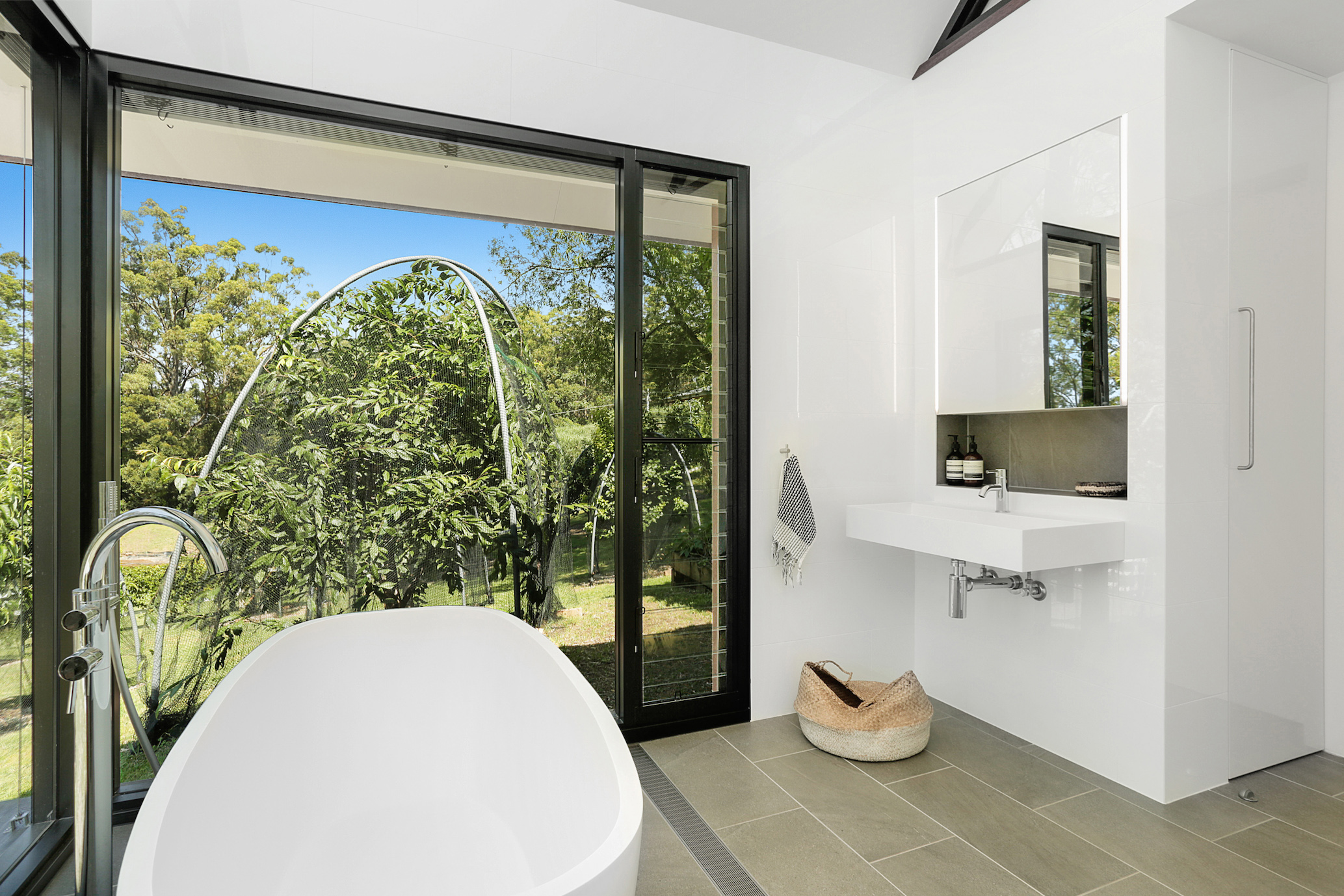
The better approach is to pick one colour to dominate and let the other do the supporting work throughout the room. A predominantly white bathroom is the more common choice in Australian homes, and it works particularly well in smaller bathrooms or those without a great deal of natural light. White walls, white tiles, and white fixtures keep the space feeling open and airy, while black tapware, fittings, a feature tile, or a dark vanity provide the contrast that stops it feeling bland.
Flipping the ratio and going predominantly dark is a bolder move, but it can be genuinely spectacular in the right space. A mostly black or deep charcoal bathroom with white grout lines, white fixtures, and carefully considered lighting feels dramatic without being oppressive.
The decision doesn't need to be complicated. Look at your space, consider how much natural light it gets, and ask yourself which direction you want the room to lean. That answer will guide almost every other decision that follows.
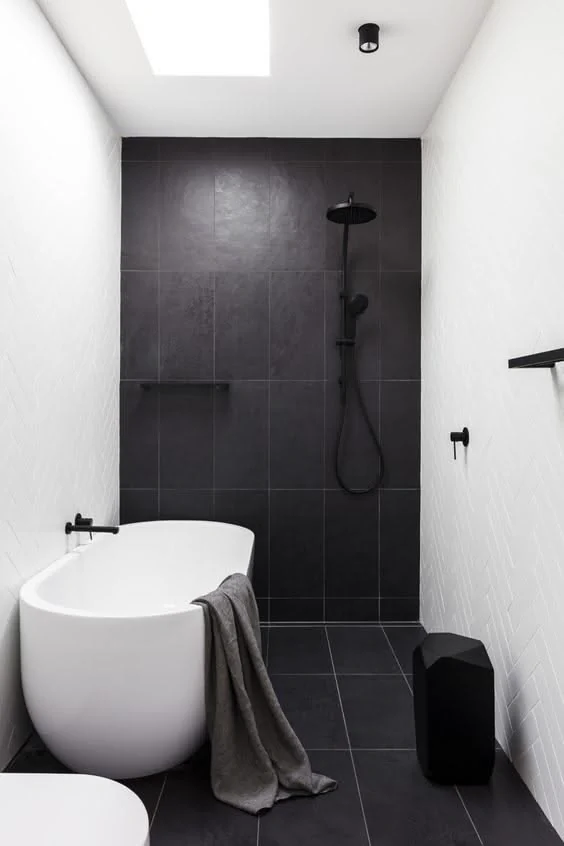
Image: Katrina Lee Designs
Black and white is the natural home of patterned tile, and this is where a bathroom can really become distinct. There is an enormous range of tile styles that feel completely at home in this palette, from classic checkerboard floors to Moroccan-inspired geometric patterns, and graphic cement tiles.
The most practical approach for most homeowners is to use pattern on the floor and keep the walls relatively simple. A bold patterned floor tile with white or off-white wall tiles lets the floor be the feature without overwhelming the senses every time you walk in.
If a feature wall is more appealing than a patterned floor, the same logic applies. Choose one surface to carry the pattern and let everything else be quiet around it. The tile is the statement, and the rest of the room is the frame.
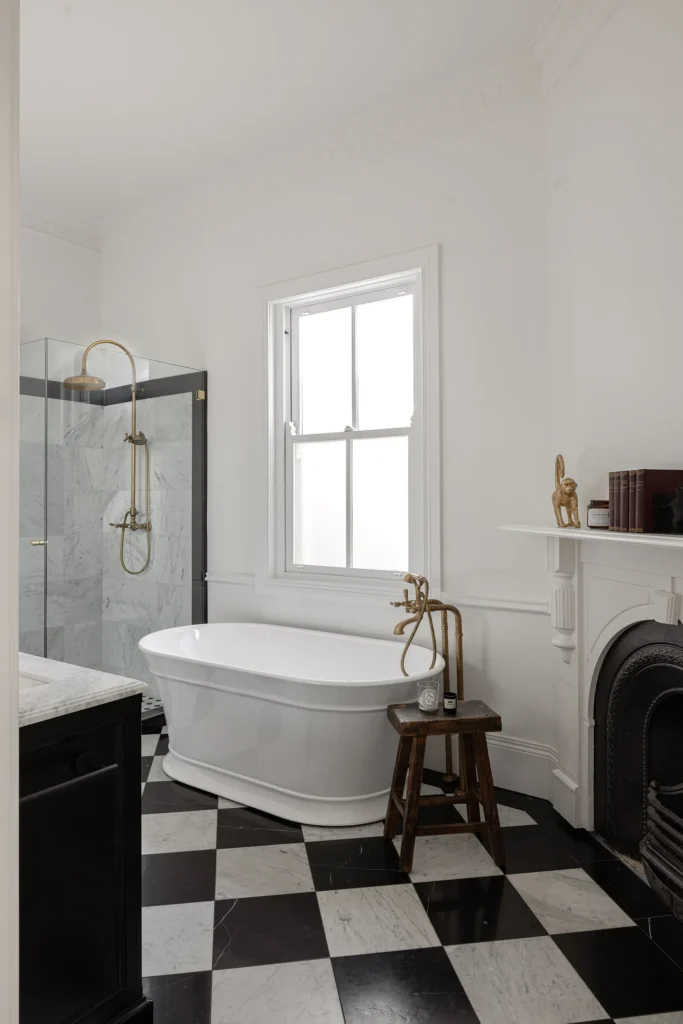
Image: Newcastle Builder, Create Builders.
One of the more common pitfalls with a black and white bathroom is that it ends up feeling cold, sterile, or a bit like a public amenities block rather than a considered home renovation. This almost always comes down to a lack of textural variety across the surfaces in the room.
When every surface is smooth, shiny, and reflective, there is nothing for the eye to rest on. The space feels flat even if the tile selection is beautiful. Here are some ideas for mixing finishes throughout the room:
The goal is to give your bathroom enough variation that it feels intentional and comfortable rather than stark. In a black and white palette, texture is doing the job that colour would do.
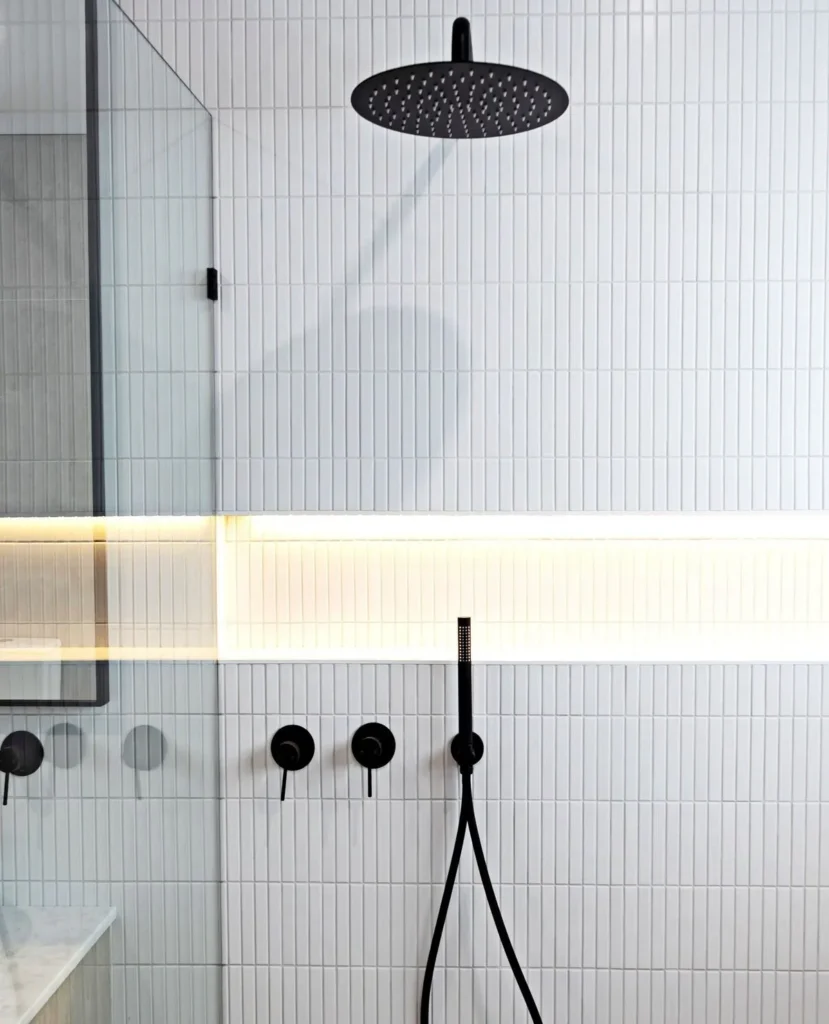
Image: Cook and Bathe
It might seem like a finishing detail, but grout colour in a black and white bathroom is a genuine design decision that deserves the same attention as any other choice in the room.
White grout on white tiles creates a seamless, uninterrupted surface that reads as clean and minimal. Dark grout on white tiles emphasises the grid of the tile layout and introduces a graphic, structured quality. White grout on black tiles softens the contrast and lets the tile itself do the talking. Each combination will create a noticeably different.
It's worth looking at samples of your chosen tile with different grout colours in the actual light conditions of your bathroom before committing. Grout colour that looks right under showroom lighting can read completely differently in a south-facing bathroom with limited natural light.
Black and white is a palette that rewards careful decision-making at every step, and the effort that goes into getting those decisions right shows in the finished result. Take the time to work through each of these considerations and your bathroom will look and feel exactly as good as it did in the inspiration images that started your whole renovation.