Renovating your bathroom is one of those projects that starts with a simple idea and quickly becomes a hundred decisions. And one of the biggest ones, both literally and figuratively, is your bathtub. The right bath can completely define the feel of a bathroom. The wrong one can leave you with a stunning feature that doesn't actually suit how you live.
With so many options on the market, it helps to understand what each bath type is actually designed for before falling in love with something in a showroom. Here's a straightforward guide to the five main bath types and how to figure out which one belongs in your bathroom renovation.
If you've spent any time scrolling through bathroom inspiration online, you've seen a freestanding bath. It sits on its own, unattached to any wall, and is typically the centrepiece of the room. They come in a wide range of shapes and styles, from classic clawfoot and slipper baths to modern oval and rectangular designs, so there's genuine variety depending on the aesthetic you're going for.
The main thing to understand about a freestanding bath is that it needs space, and not just for the bath itself. You need enough room to walk around all sides, and the tapware is floor-mounted rather than wall-mounted, which adds to the installation requirements. Plumbing rough-in needs to be planned carefully before tiling begins.
A freestanding bath could be right for you if:
Worth knowing: Freestanding baths are typically at the higher end of the price range, both for the bath itself and the installation. If budget is a consideration, factor in the floor-mounted tapware and any additional waterproofing or flooring work around the base.
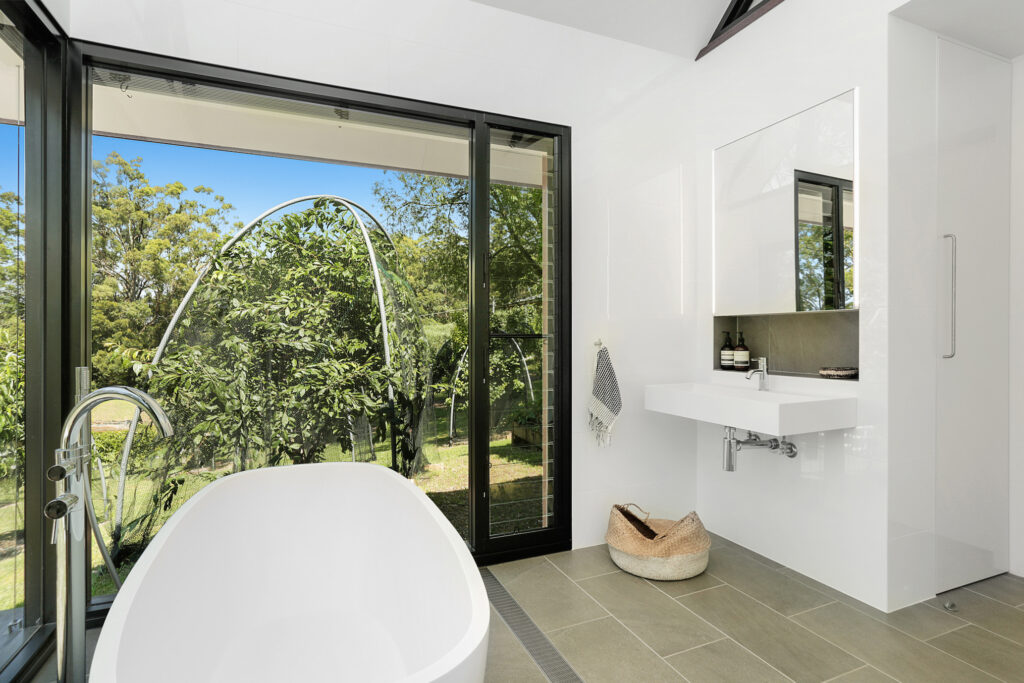
Image: Jervis Bay Builder, Sanders Construction.
This is the most common bath type in Australian homes and for good reason. A built-in alcove bath sits recessed into a three-walled alcove, usually with a tiled surround on the exposed side. It's practical, space-efficient, and works well with a shower rose overhead, making it the default choice for family bathrooms.
There's nothing flashy about an alcove bath, but that's not the point. It does its job reliably, it works for all ages, and it's the most straightforward bath to tile, waterproof, and maintain over the long term. A well-tiled alcove bath with quality tapware and fittings can look genuinely sharp without stretching the renovation budget.
Not sure how high to tile? Half wall or full wall - here's how to decide.
A built-in alcove bath could be right for you if:
Worth knowing: The alcove configuration is also the easiest to make accessible for young children and older family members, which is worth thinking about if you're renovating with the long term in mind.
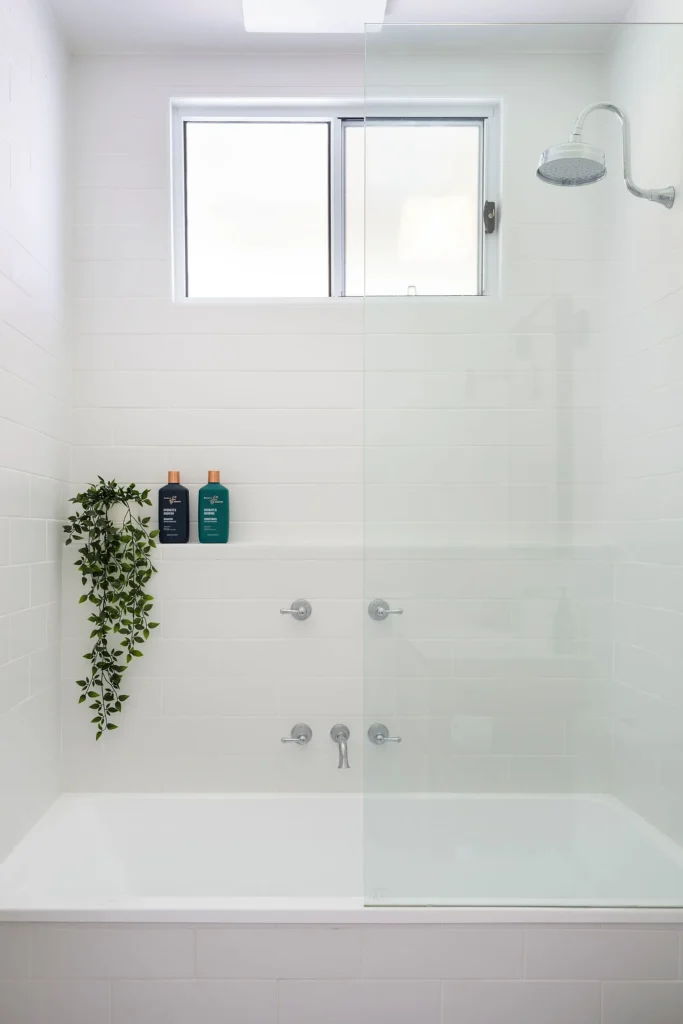
Image: custom Newcastle builder, Bull Building.
A drop-in bath is set into a custom-built platform or surround, with the rim of the bath sitting flush with or slightly above the surrounding surface. The result is a seamless, built-in look that feels more deliberate and considered than a standard alcove bath.
The appeal here is in the customisation. The platform can be tiled to match the rest of the bathroom, built from timber, or finished in a contrasting material that becomes part of the design. It's a step up from a standard alcove bath in terms of visual impact, and it gives you more control over how the bath integrates with the overall look of the space.
A drop-in bath could be right for you if:
Worth knowing: The platform adds to the overall footprint of the installation, so make sure you account for this in your floor plan. It also adds to the build cost, as the surrounding structure needs to be waterproofed and finished to the same standard as the rest of the bathroom.
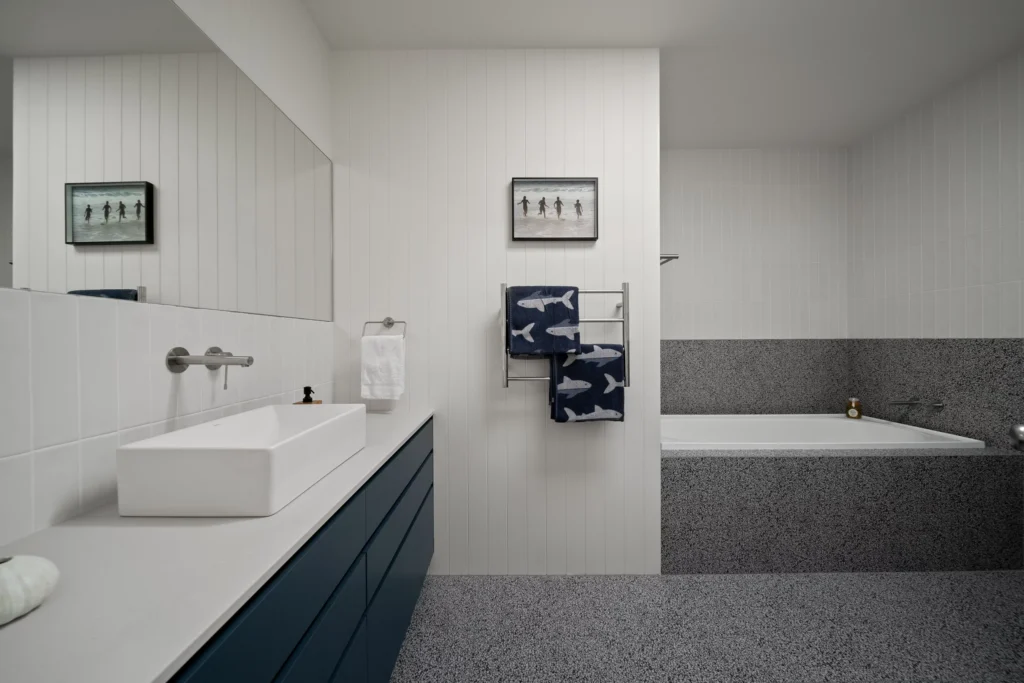
Image: Jervis Bay Builder, Sanders Construction.
As the name suggests, a corner bath is designed to fit into the corner of a bathroom, making use of space that would otherwise be left empty or wasted. They tend to be larger and more generous in their internal dimensions than a standard alcove bath, and many corner bath models come with spa or jet features built in.
They were enormously popular in Australian bathrooms through the 1990s and early 2000s and are now having something of a revival in renovations where the layout naturally lends itself to a corner installation. If you have a bathroom with an awkward corner and enough overall floor space, a corner bath can be a genuinely practical and comfortable solution.
A corner bath could be right for you if:
Worth knowing: Corner baths can feel dated if not styled carefully in the surrounding space. The key is in the finish of the surrounding tiles, tapware, and fittings rather than the bath itself. A well-executed corner bath installation in a contemporary tiled bathroom can look very considered.
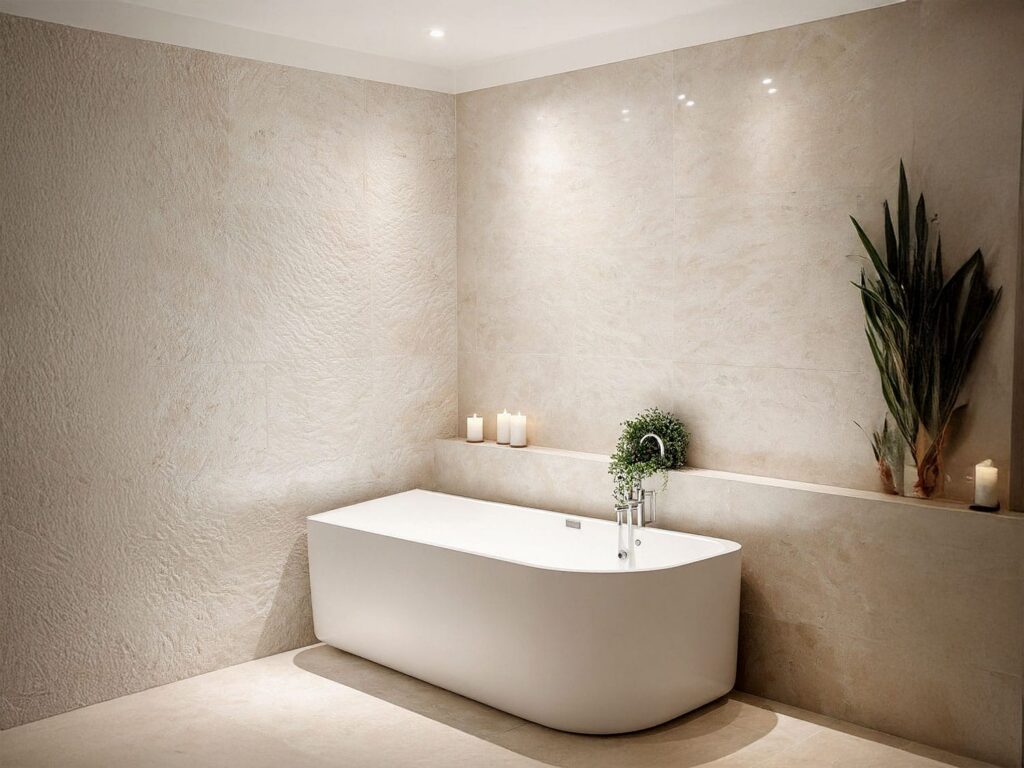
Image: Ross’s Discount Home
There's no single right answer, but working through these four questions will get you most of the way there.
How much floor space do you actually have?
Be honest about this. A freestanding bath in a room that can't comfortably accommodate it will feel crowded rather than luxurious. Measure the space and work with what you have rather than against it.
Do you need a shower over the bath?
If yes, an alcove built-in is almost always the most practical choice. Freestanding baths are generally not suited to shower-over configurations, and drop-in baths require careful waterproofing of the surrounding platform if you want to run a shower from the same space.
What is your renovation budget?
Alcove baths are the most cost-effective option from purchase through to installation. Freestanding baths, drop-in baths with custom platforms, and corner baths with jet features all add to the overall project cost. Know your number before you fall for something in a showroom.
Is the bath a design feature or a functional necessity?
Both are completely valid answers, but they lead you to different choices. If the bath is the feature you're building the bathroom around, a freestanding or drop-in style gives you the most design impact. If it's primarily functional and the shower is where you spend most of your time, a well-finished alcove bath is a smart, practical choice that won't let you down.
A bathroom renovation is a significant investment, and the bath is one of those decisions that you'll live with for a long time. Taking the time to understand what each option actually offers, beyond how it looks in a photo, makes it much easier to choose something that genuinely works for your home and the way you use it.