Setting up a bedroom from scratch can feel overwhelming, especially when you're staring at a blank room with no idea where to start. The good news is that you don't need a designer or a huge budget to create a space that feels put-together. You just need to know which changes make the biggest difference.
Here are 10 practical ideas to help you get there.
Before buying anything, decide on your colours. Bedrooms work best with calm, cohesive palettes: soft neutrals, warm whites, earthy tones, or deeper shades like charcoal or sage green. Pick one dominant colour, one secondary, and one accent, then carry those through your walls, bedding, and soft furnishings. Having a palette stops your room from looking like a collection of random purchases.
A good starting point is to look at what you're already drawn to. Check your wardrobe, your saved photos on Pinterest or Instagram, even the colours you wear most often. Chances are there's a theme. Once you have your palette locked in, every buying decision becomes easier because you have a filter to run things through.
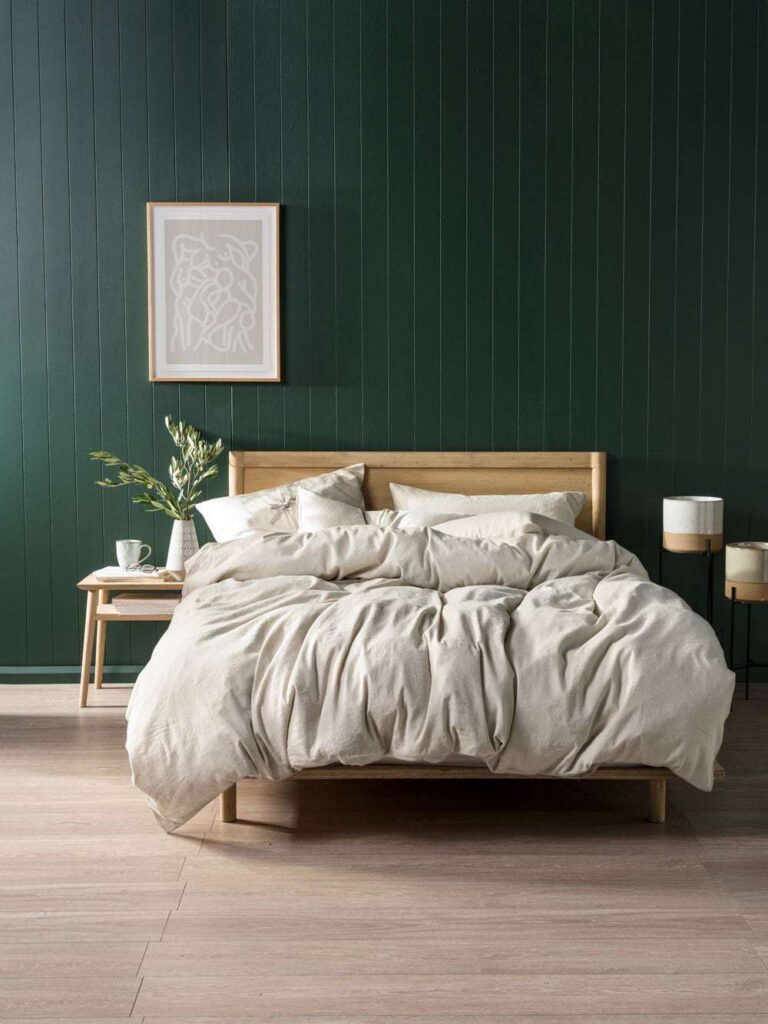
The bed is the centrepiece of the room and sets the tone for everything else. A well-chosen frame, whether upholstered, timber, or rattan, makes an enormous difference to how the room feels. If your budget is tight, this is the one piece worth spending a little more on. Size up if the room allows because a bed that's too small for the space looks lost.
Think about the style you're going for before you shop. An upholstered bedhead in a linen or boucle fabric adds warmth and softness, which suits a relaxed, layered look. A timber or rattan frame leans more natural and relaxed. A sleek, low-profile frame suits a more minimal aesthetic. The frame doesn't have to be expensive, it just has to be the right fit for the room.
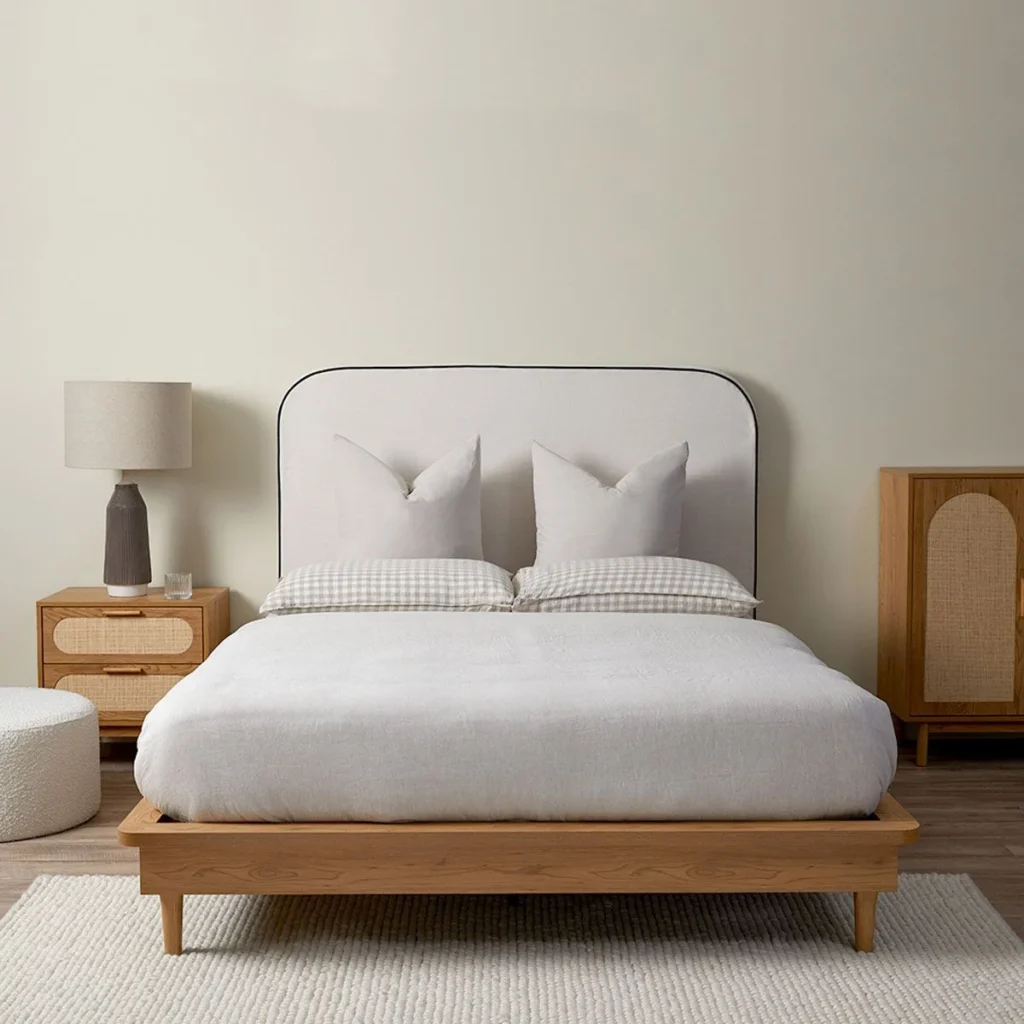
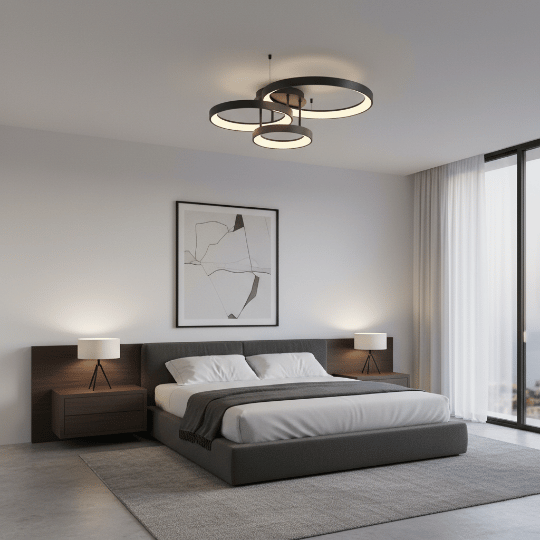
Relying on a single overhead light is one of the most common bedroom mistakes. Layer it with bedside lamps for reading, a pendant for ambience, and a floor lamp in a corner if you have the space. Dimmable bulbs on all fittings give you complete control over the mood, and they don't cost much to swap in.
Good bedroom lighting works in zones. Bright enough to get dressed in the morning, soft enough to wind down at night. Aim for warm white bulbs around 2700K to 3000K for a cosy, relaxed feel that works well in the evening.
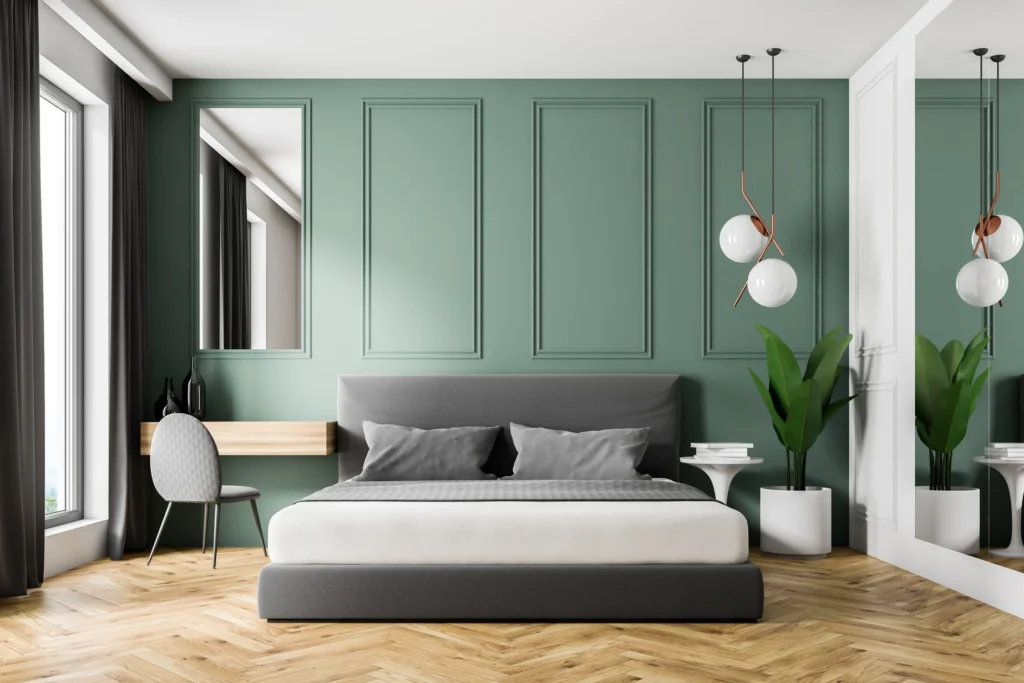
The wall behind your bed has more visual impact than any other in the room. You don't have to do anything elaborate. A deeper paint colour, some wallpaper, timber panelling, or even a gallery of framed prints can completely transform the space. This is one of the most affordable ways to make a bedroom feel designed rather than default.
Even painting just the bedhead wall rather than all four walls adds depth and intention without a huge commitment of time or money.
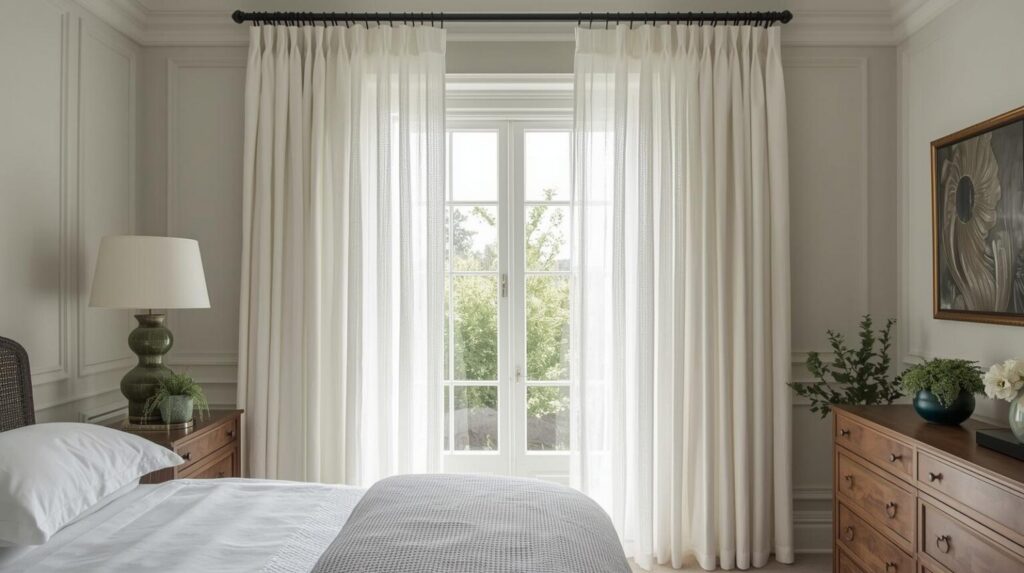
This single trick makes a room feel taller and windows look larger. Mount the curtain rod as close to the ceiling as possible and extend it well beyond the window frame on each side. Floor-length curtains in a simple fabric do the job beautifully and are far more impactful than short curtains sitting just above the sill.
Block-out curtains or block-out linings are worth considering in most climates. They keep the room cooler in summer, warmer in winter, and make sleeping in on weekends actually possible. Linen-look fabrics in neutral tones are a popular choice because they drape well and suit most palettes.
A well-styled bed is the focal point of the whole room. Start with quality sheets, add a quilt or blanket, then layer a throw across the foot. Mix textures like linen, cotton, and boucle rather than matching everything perfectly. It looks relaxed and intentional at the same time, and you don't need to spend a fortune to pull it off.
In Australia's warmer months, linen sheets are worth every cent. They're breathable, get softer with every wash, and look effortlessly put-together without much effort. For the cooler months, a chunky knit throw or a heavier quilt adds both warmth and visual interest. Layering also means you can adapt the bed to the season without starting from scratch, which is practical as well as good-looking.
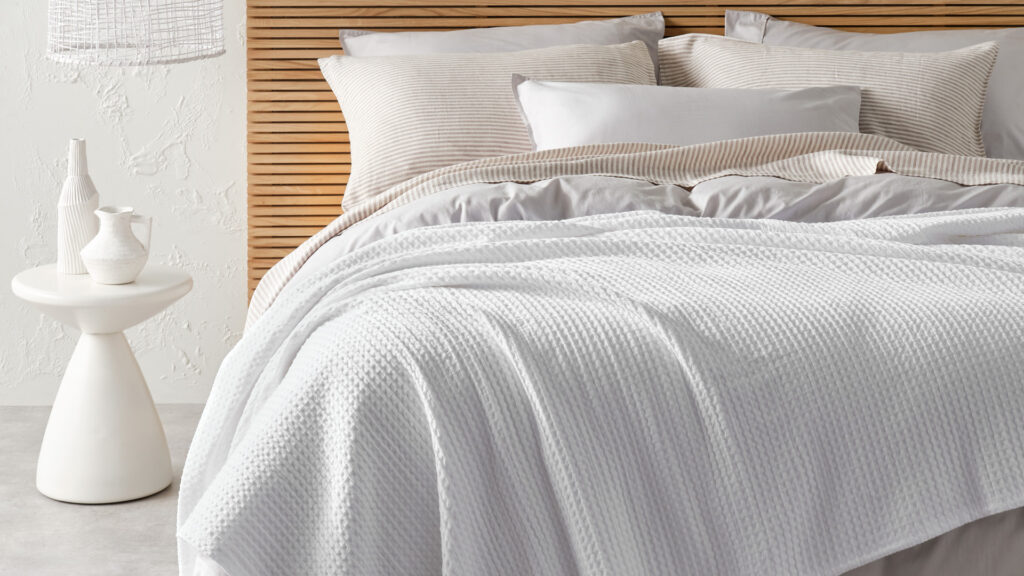
Clutter is the enemy of a calm bedroom. Bedside tables with drawers, under-bed storage, and a proper place for everything helps keep surfaces clear. The less visual noise there is, the more restful the room feels. If storage is a problem, tackle it before adding more decor because it will make a bigger difference.
A good habit is to do a quick reset each morning, putting things back where they belong before leaving the room. It takes two minutes and means you come home to a space that feels calm rather than chaotic. If clutter keeps building up, it's usually a sign that there isn't enough storage for the things you actually use daily. Solving the storage problem first makes everything else easier to maintain.
A rug grounds the room and makes stepping out of bed in the morning a lot more pleasant, especially on tiles or floorboards. The most common mistake is going too small. Aim for a rug that extends at least 60cm beyond each side of the bed.
A larger rug also helps define the bedroom zone in open-plan spaces or studio apartments where the sleeping area isn't separated by walls. If a full-size rug is out of budget, two matching bedside rugs placed either side of the bed can achieve a similar grounding effect at a lower cost. Either way, having something soft underfoot first thing in the morning is a small comfort that genuinely improves the daily experience of your room.
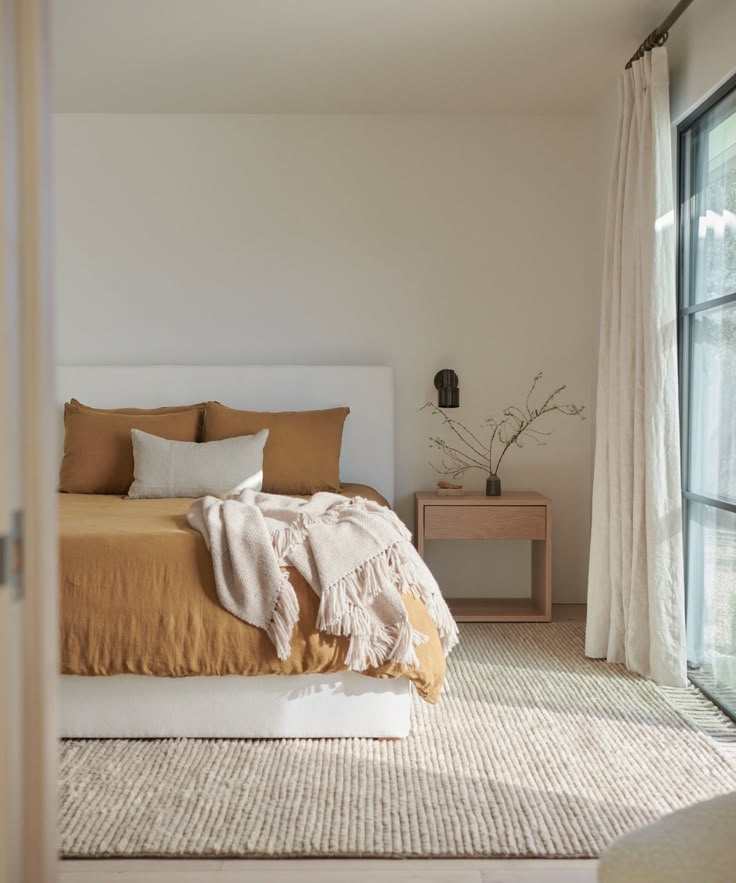
Accessories can finish a room or overwhelm it. On bedside tables, aim for three things maximum: a lamp, something functional like a book or glass of water, and one decorative piece. On walls, fewer larger pieces look more intentional than a crowded arrangement of small ones. When in doubt, take something away rather than adding more.
A useful approach is to style your surfaces, then walk away and come back with fresh eyes. What draws your attention first? If it's clutter rather than a focal point, edit it back. Accessories should support the mood of the room, not compete with it. Candles, a small plant, a ceramic vase, or a stack of books all work well in a bedroom because they add personality without visual noise.
The best bedrooms engage all the senses. Think about what the room smells like (a simple reed diffuser goes a long way), what it sounds like (soft furnishings absorb echo and make the room feel quieter), and how comfortable the temperature is.
Natural materials help here. Timber, linen, cotton, and wool all regulate temperature better than synthetic alternatives and tend to feel more comfortable throughout the year. A bedroom that feels good to be in, one that's cool enough in January and cosy in July, is one you'll actually want to retreat to at the end of the day. That's the real goal.
The most important thing to know is that a great bedroom is built gradually. Start with the foundations: a colour palette, good lighting, and the right bed, then layer in the details over time. Small, intentional changes add up quickly, and you'll be surprised how far a bit of planning goes without blowing the budget.
If you're renovating or building and want to get the bones of your home right from the start, Builder for You can connect you with experienced local builders.