If you're mid-way through planning a bathroom renovation, chances are you've already gone down the rabbit hole of tile options, layouts, and finishes. But before any of that, there's a more fundamental question to answer: how much of your wall should you tile?
Half wall or full wall tiling is one of those decisions that shapes everything else, from your budget through to the overall look and feel of the finished space. It's not a one-size-fits-all answer, and what works brilliantly in a small inner-city apartment bathroom might feel totally wrong in a sprawling ensuite in the suburbs.
Let's break it down so you can make the call with confidence.
Half wall tiling means tiling only the lower portion of your bathroom walls, typically somewhere between 900mm and 1350mm from the floor. Above that line, you finish with paint, a feature wallpaper, or another surface treatment of your choice.
It's a classic look that's been popular in Australian homes for decades, and for good reason. The contrast between the tiles below and paint above can add real character to a bathroom, particularly in federation or heritage-style homes where that layered look feels authentic rather than dated.
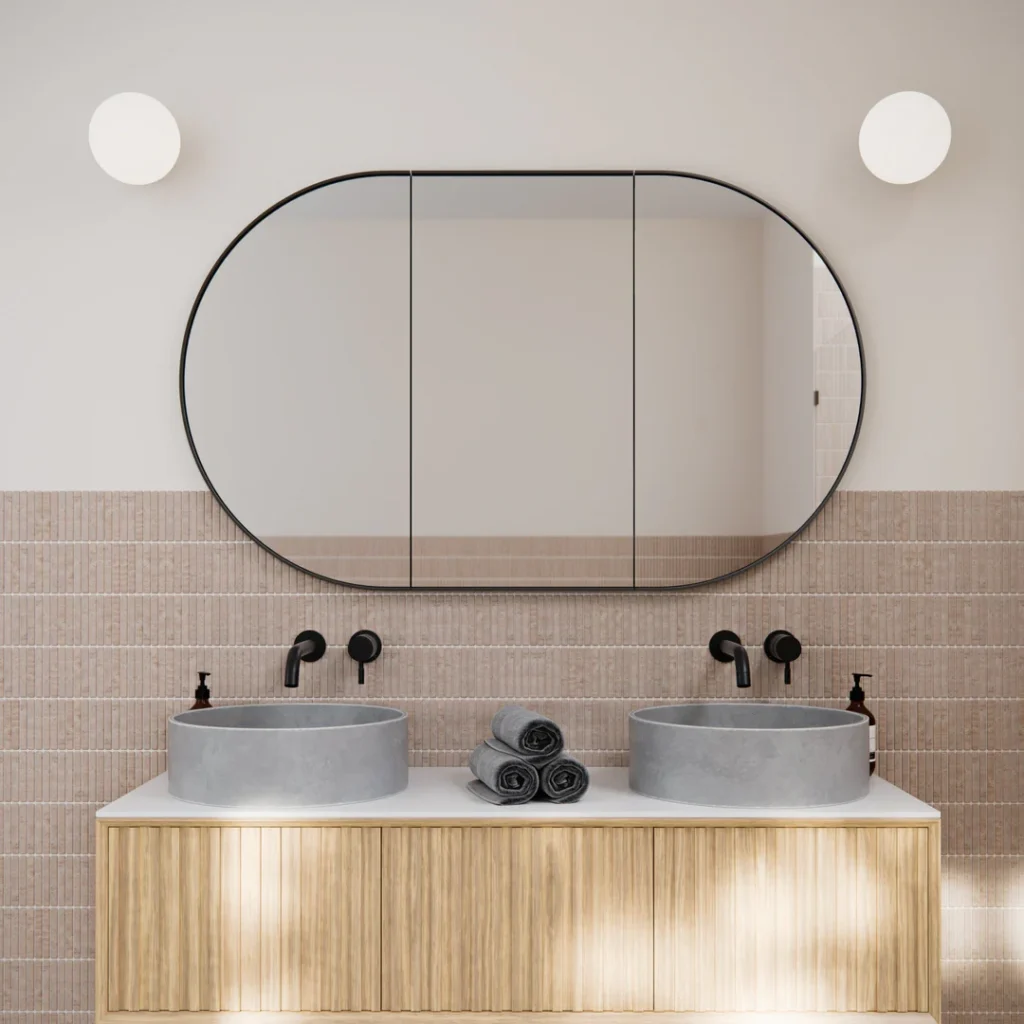
Image: Future Glass
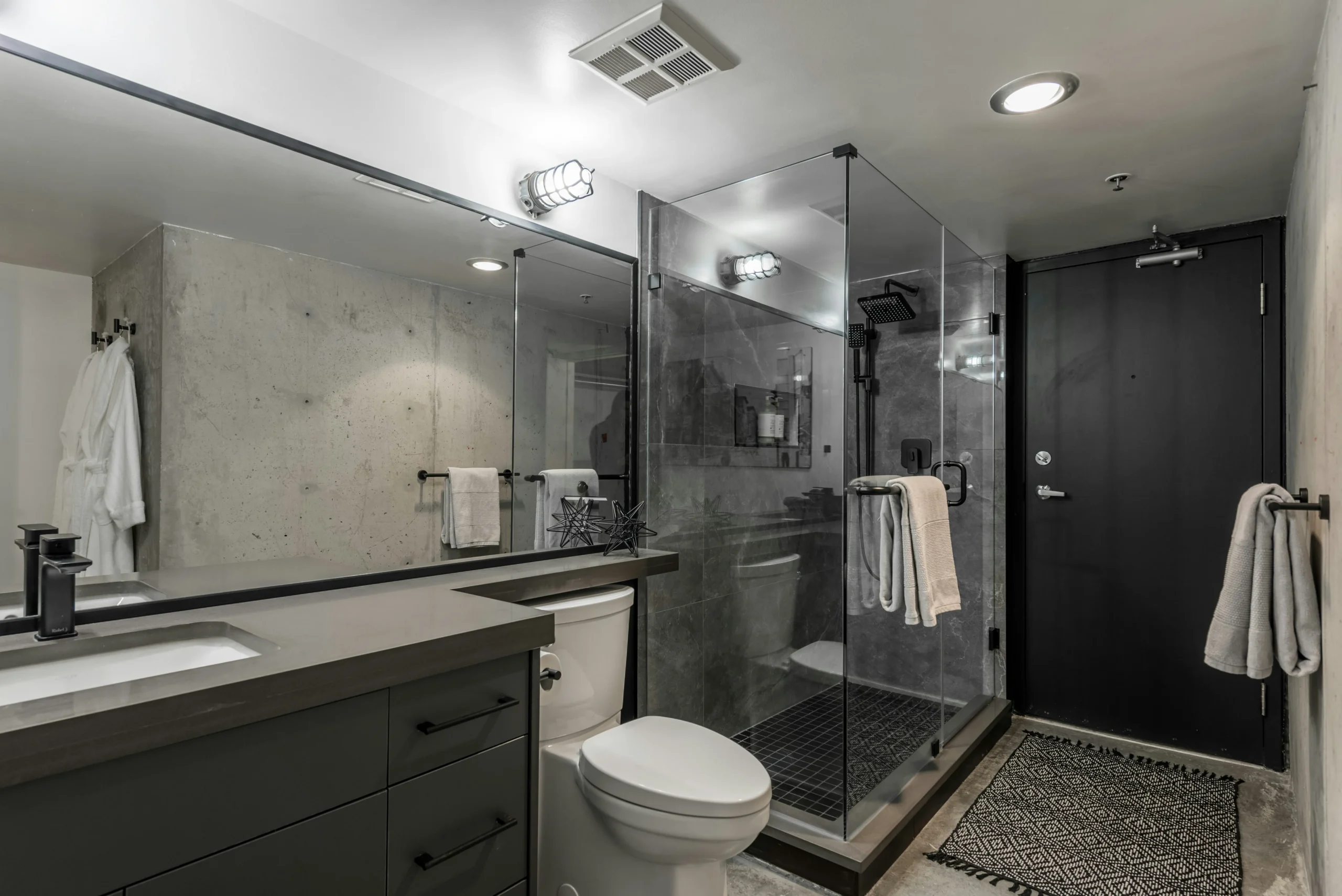
Full wall tiling takes the tile all the way from the floor to the ceiling across some or all of your bathroom walls. It's the go-to approach in contemporary Australian bathroom design, and you'll see it everywhere in new builds and modern renovations.
Done well, full wall tiling looks sleek, clean, and intentional. It's particularly effective in wet areas like showers and around freestanding baths, where moisture management matters most. But plenty of homeowners also extend full tiling to non-wet walls for a cohesive, polished finish throughout the entire room.
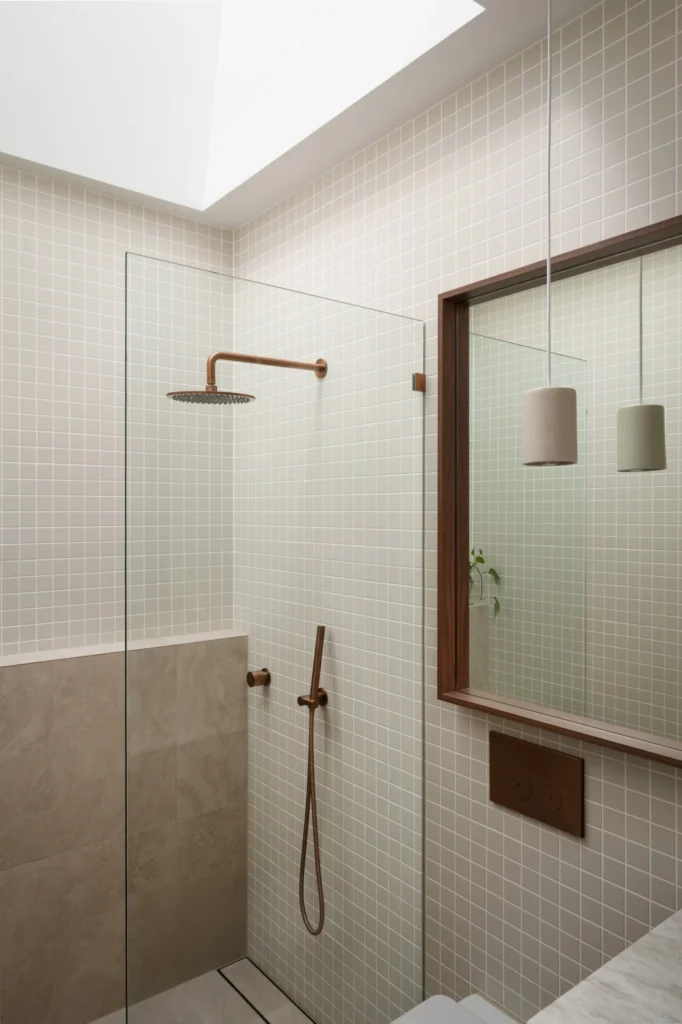
Image: Builder Newcastle, Alchemy Built.
Full wall tiling uses more material and more labour, so it will cost more. As a rough guide, expect to pay roughly 1.5 to 2 times the cost of a half wall treatment for the same room, once you factor in additional tiles, adhesive, grout, and the extra time on site for your tiler.
In a standard Australian bathroom of around 5 to 8 square metres, that difference can add up quickly. It's worth getting a few quotes from local tilers early in your planning so you're working with real numbers rather than guesses.
This is where full wall tiling has a clear edge. Paint and wallpaper above a half-tiled wall are vulnerable to steam, splashing, and humidity over time. In a busy family bathroom or any room with a shower, that upper section can start to bubble, peel, or show mould growth within a few years.
Full wall tiling eliminates that risk entirely. Tiles are non-porous, easy to wipe down, and won't deteriorate from moisture exposure the way painted surfaces can.
Both options have merit here, and it comes down to the style you're going for.
Half wall tiling creates a sense of warmth and visual interest through contrast. It works particularly well in bathrooms with higher ceilings, where a full tile treatment might feel clinical or overwhelming. It also gives you more freedom to introduce colour or pattern through paint without committing to a full-room tile purchase.
Full wall tiling, especially with large-format tiles or a single continuous tone, tends to make a bathroom feel larger, more modern, and easier to maintain. In smaller bathrooms with standard 2400mm ceilings, extending the tile all the way up can actually open the space up rather than close it in.
If you like to update your interiors every few years, half wall tiling gives you a practical advantage. Want to refresh the look without retiling? Simply repaint the upper wall. With full wall tiling, any significant change means a full reno.
Regardless of which option you choose for the rest of your bathroom, there is one area where full tiling is not optional: your wet zones.
Any wall that sits within or directly adjacent to your shower recess or bath must be tiled properly, full stop. In Australia, the relevant standard is AS 3740, which sets out waterproofing requirements for wet areas in residential construction. Your tiler and waterproofer should both be familiar with these requirements.
A family bathroom with either a shower over bath or separate shower tends to cop a lot of daily use, steam, and the occasional splash that goes further than expected. Full wall tiling is generally the more practical choice here. It holds up better to hard use and makes cleaning straightforward.
A powder room or guest toilet that sees lighter use and no showering is an ideal candidate for half wall tiling. With less moisture in the air, paint or wallpaper above the tile line will hold up well, and you have more creative freedom to make a design statement.
Ensuites are often where Australian homeowners want to splurge a little. Full wall tiling in a large-format stone-look porcelain or terrazzo-style tile is a popular choice that delivers a boutique hotel feel. That said, a beautifully done half tile treatment with a feature paint colour above can look just as considered, and gives you more flexibility to update the look over time.
In a small bathroom, full tiling in a light, consistent tone can visually push the walls back and make the space feel larger than it is. A mid-height tile line with a darker paint above can have the opposite effect, breaking up the wall in a way that emphasises how small the room is. If your bathroom is on the compact side, full tiling is usually the better call.
Neither half wall nor full wall tiling is the universally right answer. The best choice depends on your bathroom's purpose, your budget, the style you're going for, and how much maintenance you're happy to take on.
If you're renovating a hardworking family bathroom or a compact space, full wall tiling generally delivers better long-term results. If you're updating a powder room or want to bring some warmth and personality to a larger bathroom, half wall tiling gives you real design flexibility without the full cost commitment.
Whatever you decide, get the wet areas right, use a quality tiler, and make sure your waterproofing is done to Australian standards. The tiles are the part everyone sees, but it's the work behind them that determines how well your bathroom holds up over the years.