Open shelving is one of those design choices that looks effortlessly beautiful in every home tour and renovation reveal, and then somehow ends up looking a bit chaotic in real life. Sound familiar? You're not alone. The difference between a shelf that looks styled and one that looks cluttered almost always comes down to a handful of decisions made before a single object is placed.
The great news is that none of this requires a design degree or an unlimited budget. It just takes a bit of know-how and a willingness to edit. Here's how to get it right.
This is the single most powerful thing you can do for open shelving, and it's the step most people skip. Before you start arranging anything, decide on two or three colours and stick to them across the entire display.
It doesn't have to be strict. Think of it more as a guiding range. Warm neutrals like cream, terracotta and timber tones work beautifully together in Australian homes and complement the natural light we tend to get. Cool palettes with white, sage and matte black are equally popular right now and feel fresh in contemporary kitchens and living spaces.
When everything on a shelf shares a general colour story, even a fairly full shelf reads as intentional rather than chaotic. It's the quickest way to make a random collection of objects look curated.
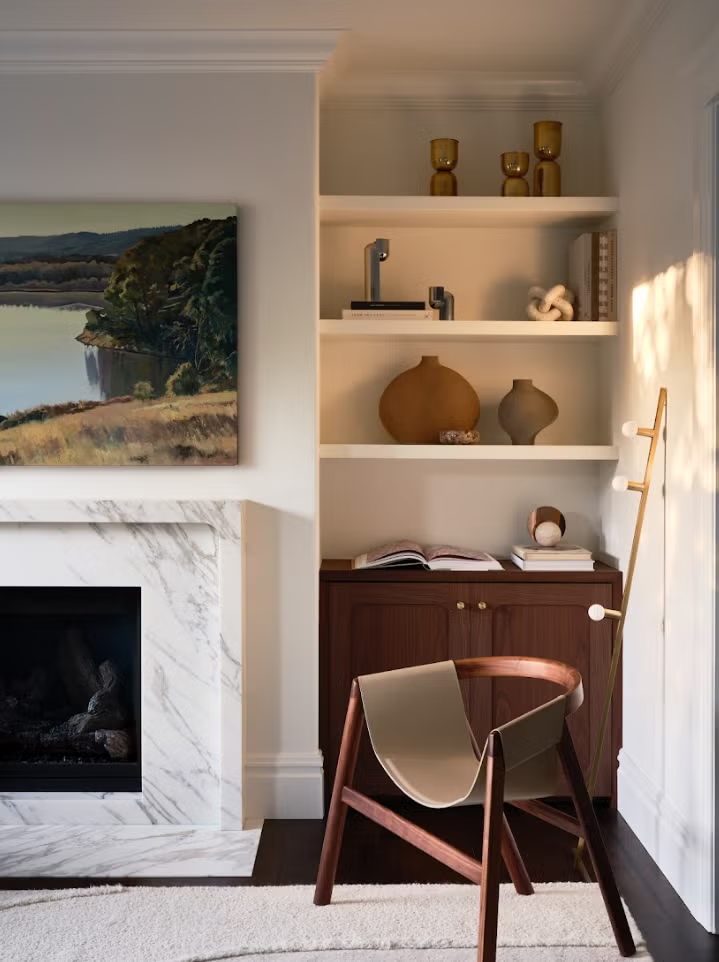
This one comes straight from the world of interior styling, and it works. Grouping objects in threes or fives feels more natural and visually balanced than even numbers. Two identical items sitting next to each other look accidental. Three items of varying heights grouped together look deliberate.
Try it next time you're arranging a shelf. Take two objects you've placed side by side and add a third of a different height or scale. The difference is immediate.
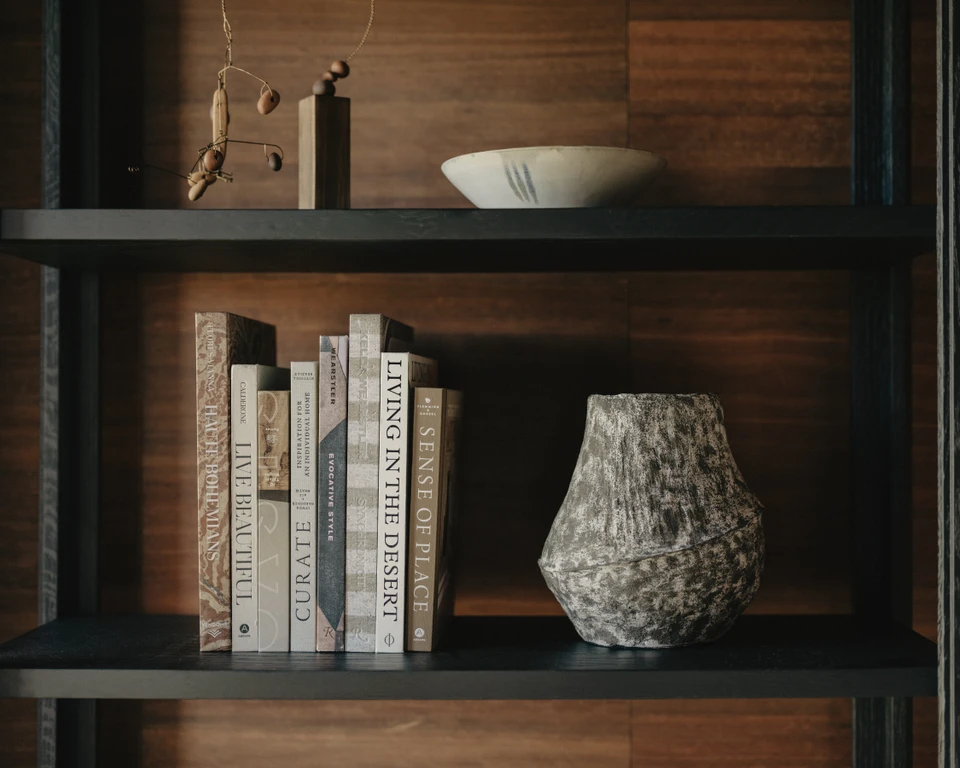
Flat shelves filled with objects all at the same height look dull, no matter how beautiful the individual pieces are. Visual interest comes from variation. Pair a tall vase or candle with a mid-height stack of books and a small bowl or trailing plant at the base. The eye moves across the shelf rather than sliding straight off it.
A practical tip: when you're pulling things together for a shelf, gather more items than you think you need, then arrange and subtract rather than trying to build up from nothing. It's much easier to edit down than to keep adding.
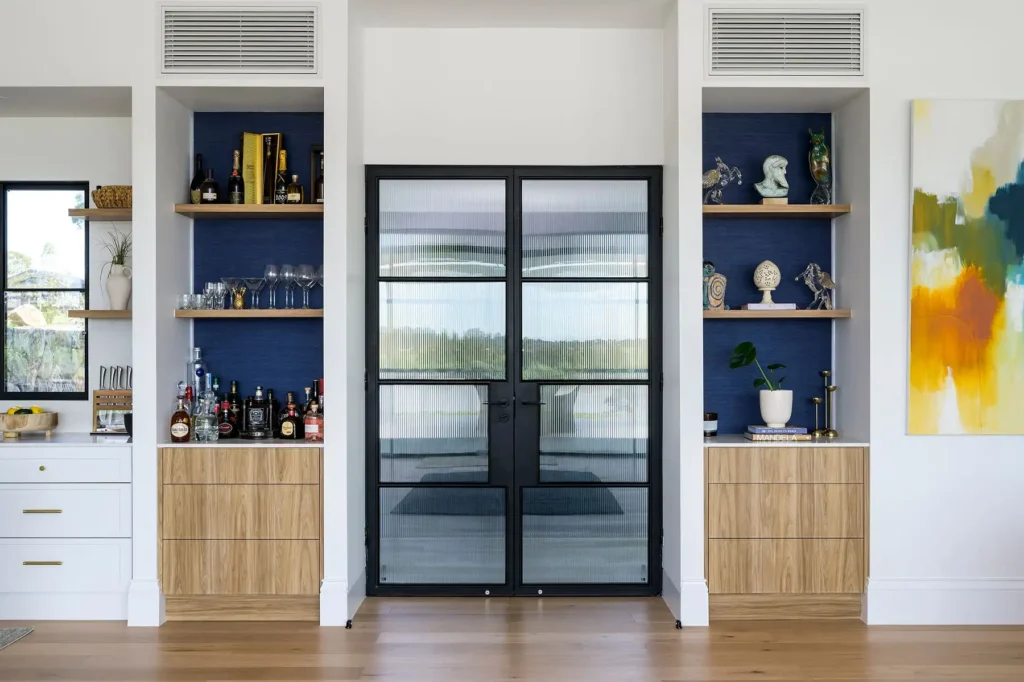
Texture is what gives a shelf warmth and depth, especially when you're keeping the colour palette restrained. Aim to mix materials across each shelf. Timber, ceramic, linen, woven baskets, matte metal, glass and greenery all work well together and reflect the kind of natural, relaxed aesthetic that suits Australian homes particularly well.
A raw timber cutting board propped against the back of a kitchen shelf, a ceramic vase alongside a small linen bundle, a trailing pothos in a terracotta pot. These combinations feel collected and real rather than catalogue-perfect.
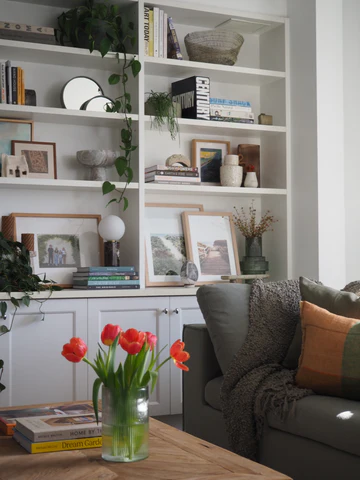
This is the mistake that trips up almost everyone the first time around: filling every centimetre of shelf space because it feels wasteful to leave any of it empty.
Negative space is not wasted space. It is what makes everything else on the shelf look intentional. A rough guide is to aim for around 20 to 30 percent of each shelf to remain clear. That breathing room is what gives the eye somewhere to rest and makes the pieces you have chosen to display feel considered rather than crammed in.
If your shelves feel too full, start removing things before you start rearranging. Take away three items and step back. Chances are it already looks better.
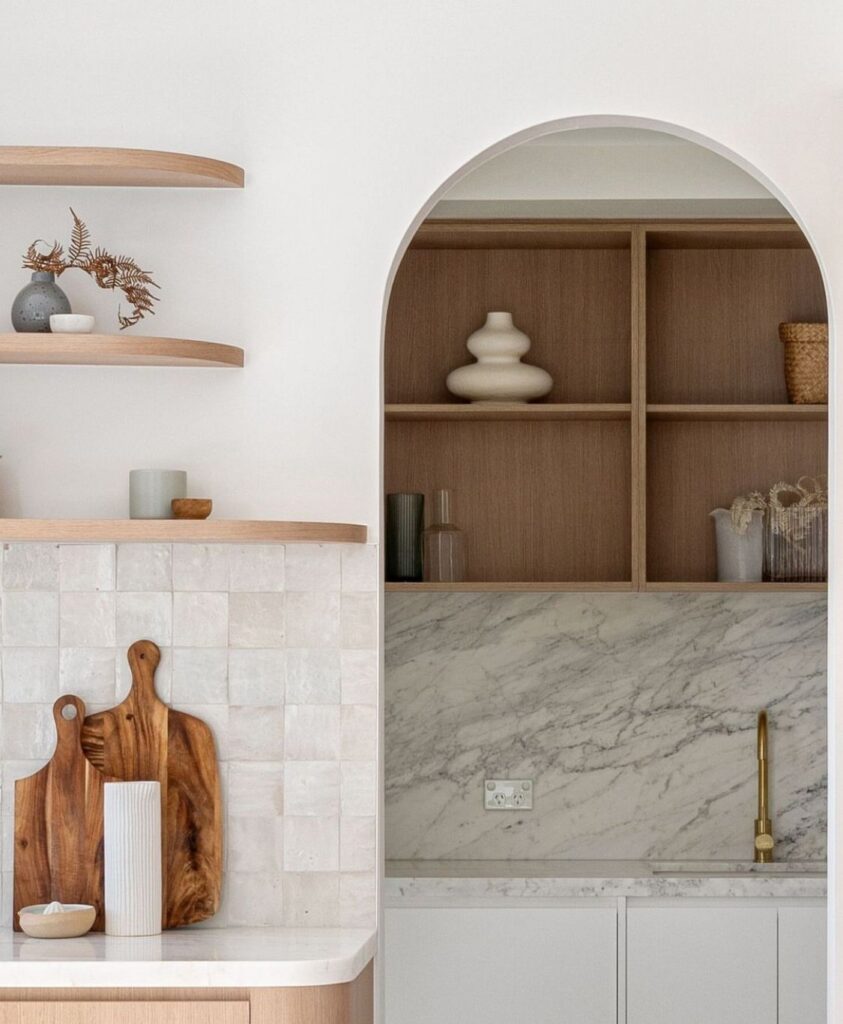
One of the easiest ways to make open shelving look relaxed and lived-in rather than staged is to lean objects against the back panel instead of placing everything upright and forward-facing. A framed print, a small mirror, a cookbook propped open or a wooden board leaned casually against the back of a shelf instantly softens the whole display.
It gives the shelving a sense of personality, like the objects have landed there naturally rather than been arranged by a set designer.
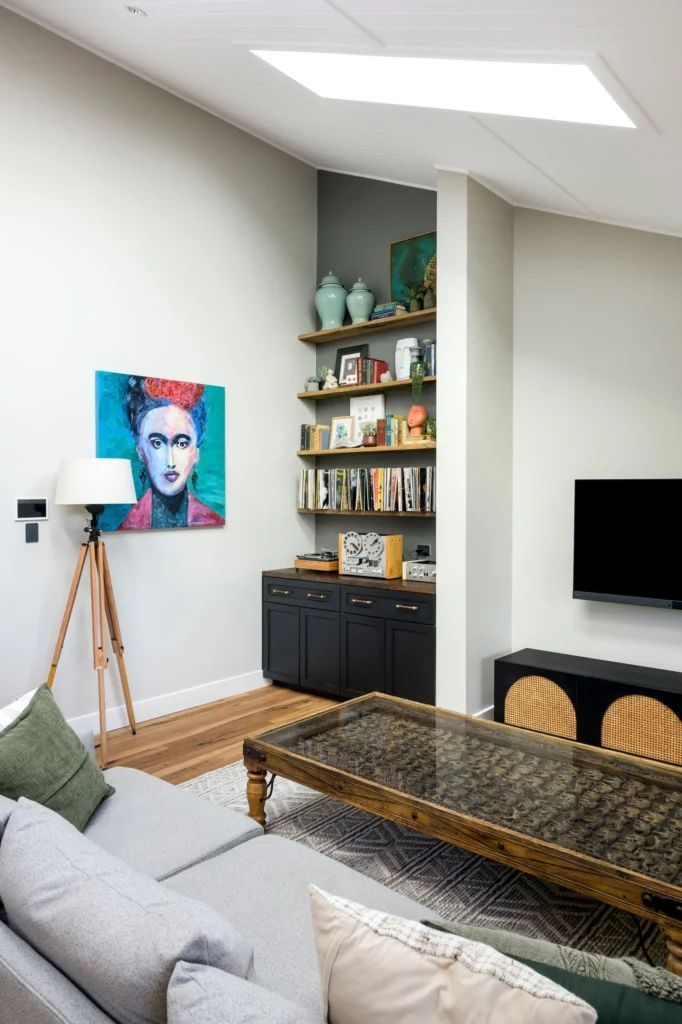
Open shelving in a kitchen or bathroom comes with a practical challenge that purely decorative shelving in a living room doesn't: it has to actually store things you use every day. Spices, oils, cotton pads, hand cream. Left loose, these items quickly make even the most beautifully styled shelf look messy.
The solution is decanting and containing. Matching glass jars for pantry staples, a small tray to corral bathroom bits, a woven basket for anything that doesn't have a nice enough container of its own. When functional items are unified by vessel, they become part of the styling rather than working against it.
This is also a good reason to invest in a few quality containers if you're going to commit to open shelving in a kitchen or bathroom. They do a lot of heavy lifting.
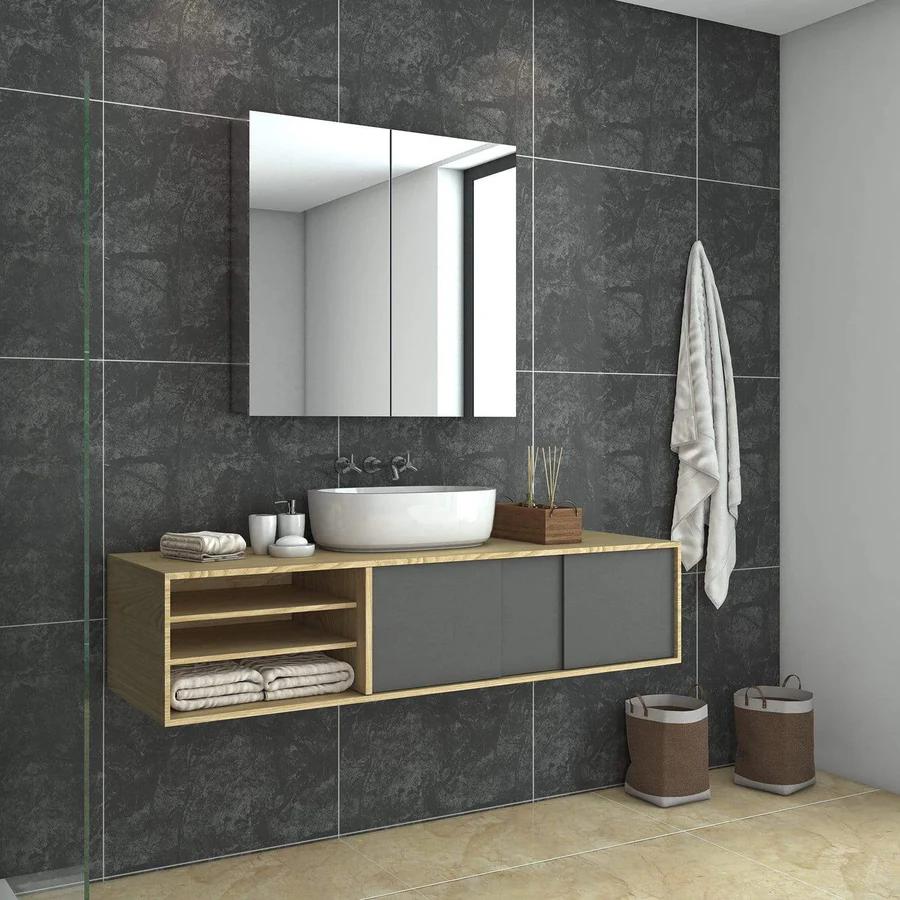
Styling open shelving is an ongoing process, not a one-time job. Things accumulate. Seasons change. What felt right six months ago can start to look tired or crowded. Getting into the habit of stepping back and editing every now and then keeps shelves looking intentional over time.
The question to ask is not "what else could go on here?" but "what could come off?" The best-looking open shelving in any home almost always has less on it than you'd expect. Restraint is the whole game.
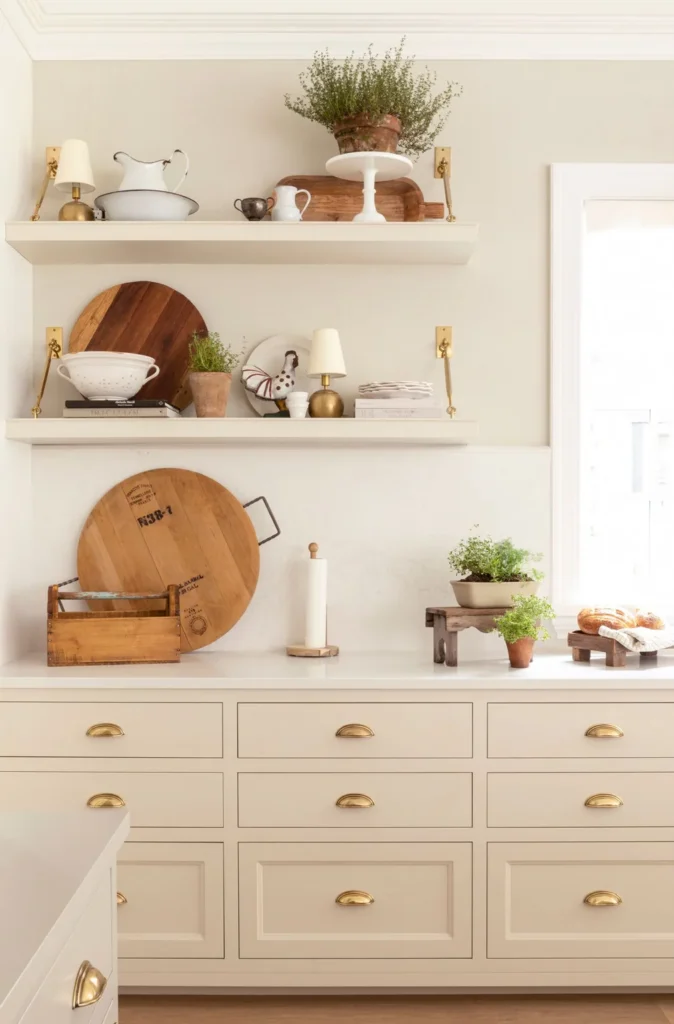
Australian interiors tend to favour a relaxed, nature-connected aesthetic that open shelving suits very well. Natural materials, handmade ceramics, local artwork, native botanicals in simple vessels. These are the kinds of objects that look at home on open shelving in an Australian context and don't date quickly.
There's also something to be said for shopping local when you're pulling a shelf together. Australian makers and small ceramics studios produce beautiful work that brings a sense of place to a shelf that you simply won't get from mass-produced pieces. Markets, local homewares stores and online platforms like Etsy Australia are worth exploring if you want your shelving to feel genuinely individual.
Open shelving rewards intention. It is not a place to put things that need a home. It is a display opportunity, and treating it that way from the start changes everything about how you approach it.
Pick your palette, vary your heights, leave space, contain the clutter and edit often. Do those things consistently and open shelving will look exactly the way you hoped it would when you decided to put it in.