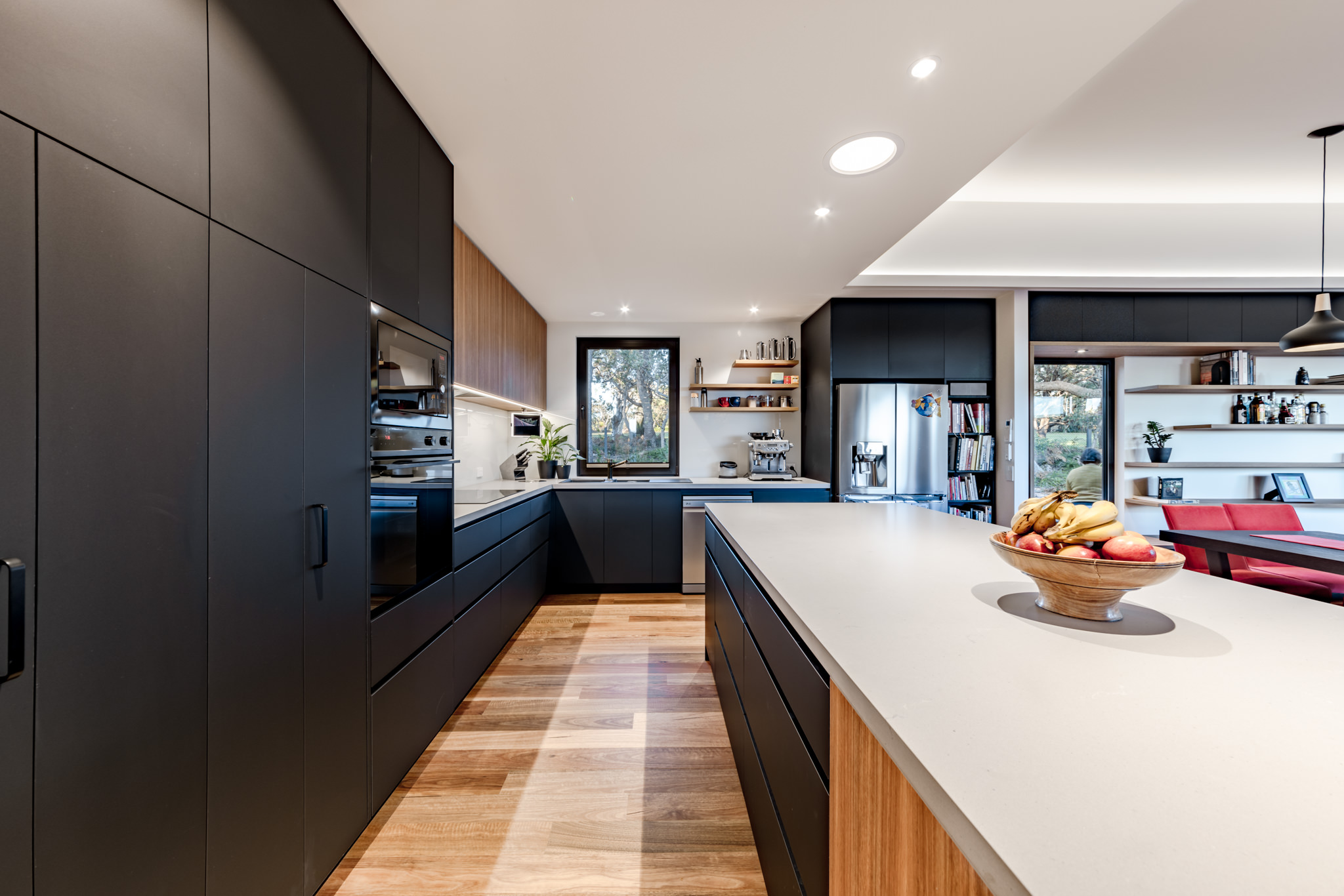
If you’re planning a kitchen renovation, the island bench is likely the most defining feature you'll choose. It’s where everyone gathers around, where you prep meals, and where the kitchen really starts to feel like the heart of the home. But get the size wrong and it can throw off the entire space, making it feel cramped, awkward, or just frustrating to move around in.
The good news is that finding the right kitchen island size is not guesswork. There is a simple, practical process you can follow before you commit to a single tile or cabinet.
Instead of picking an island size and then seeing if it fits, start by working out how much space you need around the island.
As a general rule:
Measure the total floor space in your kitchen, then subtract these clearance zones from all sides. Whatever is left tells you the maximum footprint your island can take up. Think of the clearance first, and the island size will follow naturally.
Once you know your available space, you can match it to a size that suits how you actually use your kitchen.
| Use Case | Width | Length |
| Smaller or galley-style kitchen | 600 to 900mm | 900 to 1,200mm |
| Average Australian kitchen | 900 to 1,050mm | 1,200 to 1,800mm |
| Large or open-plan kitchen | 1,050 to 1,200mm | 1,800 to 2,400mm |
| Island with seating | 900 to 1,200mm | 1,500 to 2,400mm |
Standard bench height is 900mm, which is consistent with most Australian kitchen benchtops. If you are adding a raised breakfast bar section for seating, bump that area up to around 1,050mm.
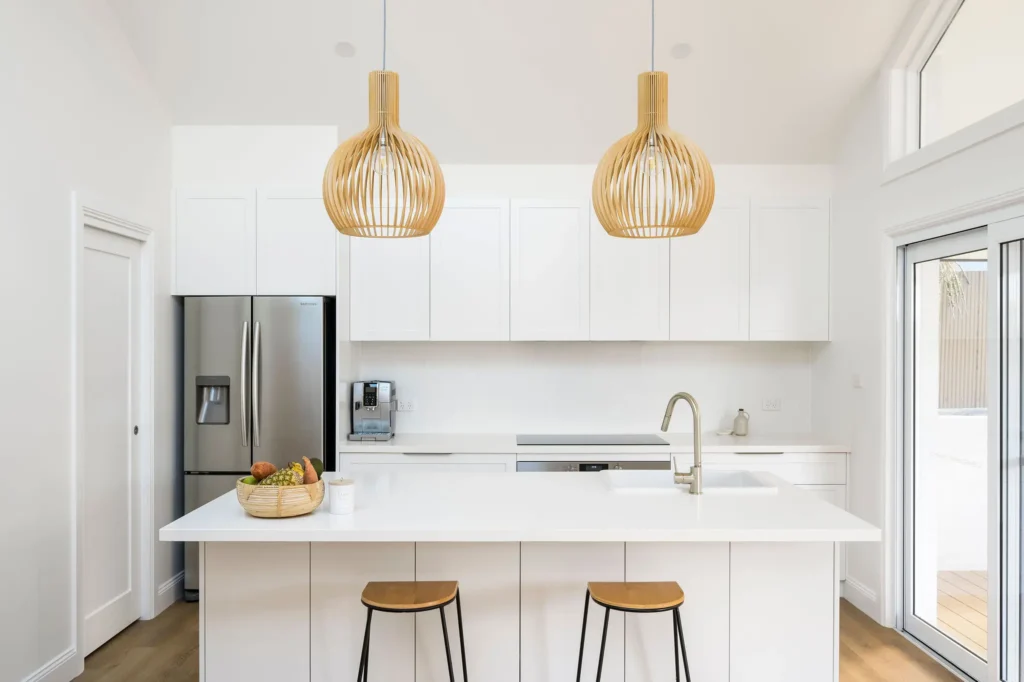
Most Australian kitchens are open-plan, which means the island needs to function as both a work surface and a gathering spot. Done well, seating along one side achieves exactly that. The key measurements to keep in mind:
If seating is a priority, make sure you are adding enough length to accommodate the number of seats you actually want without anyone feeling squeezed in.
Traffic flow: If your island sits close to a sink, stove, or fridge, you need to be even more generous with clearance. High-traffic zones need breathing room.
What the island will actually do: A prep-only island can be narrower (600 to 750mm wide). An island with a sink or cooktop built in needs to be deeper, at least 900 to 1,050mm, to allow proper workspace on either side.
Ventilation for a cooktop island: If you plan to add a cooktop, you will need overhead rangehood clearance, which affects the ceiling height and placement planning considerably.
Visual proportion: In open-plan living spaces an undersized island can look lost. The island needs to feel anchored in the space, not like an afterthought. Aim for a size that is proportionate to your kitchen’s overall footprint.
This is a fair question to ask early in the planning process. As a practical guide:
A peninsula, which attaches to an existing wall or cabinetry run on one end, is a great option for smaller kitchens. It gives you much of the functionality of an island while requiring clearance on fewer sides.
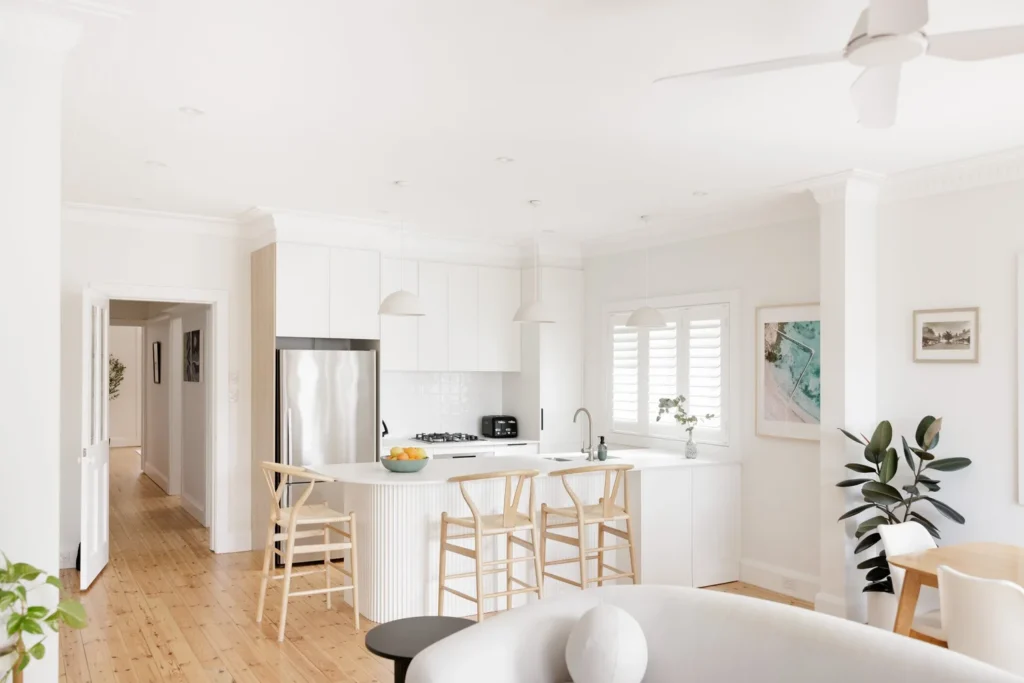
The right kitchen island size comes down to your clearance zones, your kitchen's actual footprint, how you use the space, and how many people move through it on a typical day. Start with those constraints, and the right dimensions will become clear pretty quickly.
If you are working with a kitchen designer or builder, bring your measurements along and ask them to walk you through the clearance requirements for your specific layout. The numbers in this article are solid starting points, but every kitchen is a little different.