Once reserved for grand estates and formal entertaining, the butler's pantry has made a comeback in Australian homes. But forget the stuffy, traditional image. Today's butler's pantry is all about making everyday life easier, not just impressing dinner guests.
Whether you're renovating or building new, a well-designed butler's pantry can become the hardest-working space in your home. Here are seven practical ideas to help you create one that works for real life, not just special occasions.
The best butler's pantry keeps your most-used items exactly where you need them. Store everyday dishes, glassware, and serving pieces at eye level so you're not constantly reaching or bending. Reserve the higher shelves for occasional-use items like your Christmas platters or the fancy china that only comes out a few times a year.
Deep drawers work brilliantly for table linens, placemats, and tea towels, while pull-out shelves give you easy access to everything at the back. The goal is simple: keep your main kitchen uncluttered while ensuring everything stays within arm's reach. No more digging through overcrowded cupboards during the weeknight dinner rush.

Transform one section of your butler's pantry into a drinks station and you'll wonder how you ever lived without it.
If you take your coffee seriously, this is where your espresso machine, grinder, and coffee station can live permanently, so you can keep your kitchen benchtop clear.
This setup also creates a morning routine zone that doesn't compete with breakfast prep happening in the main kitchen. On weekends when you're hosting brunch, guests can help themselves to coffee while you're plating up the smashed avo.
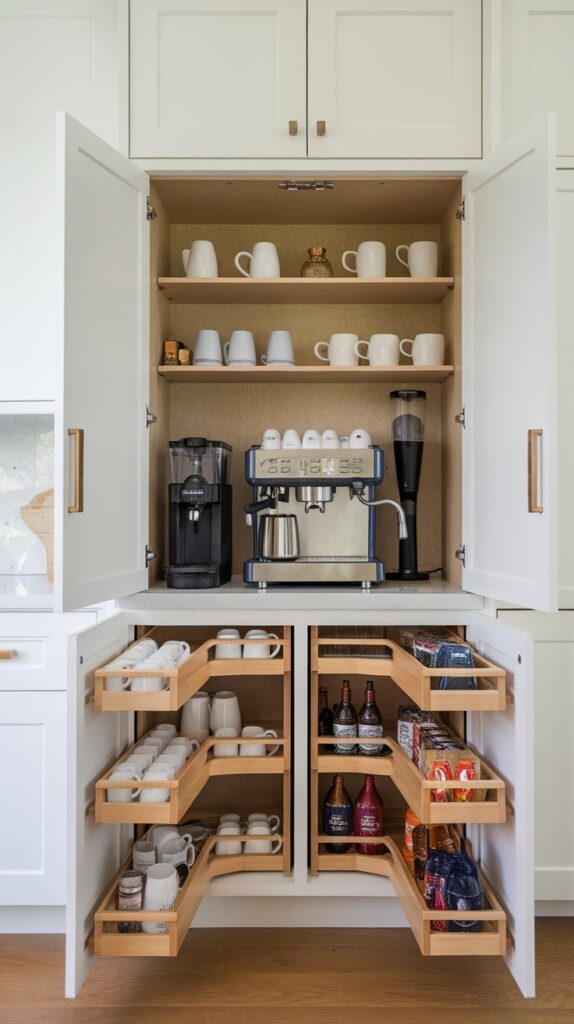
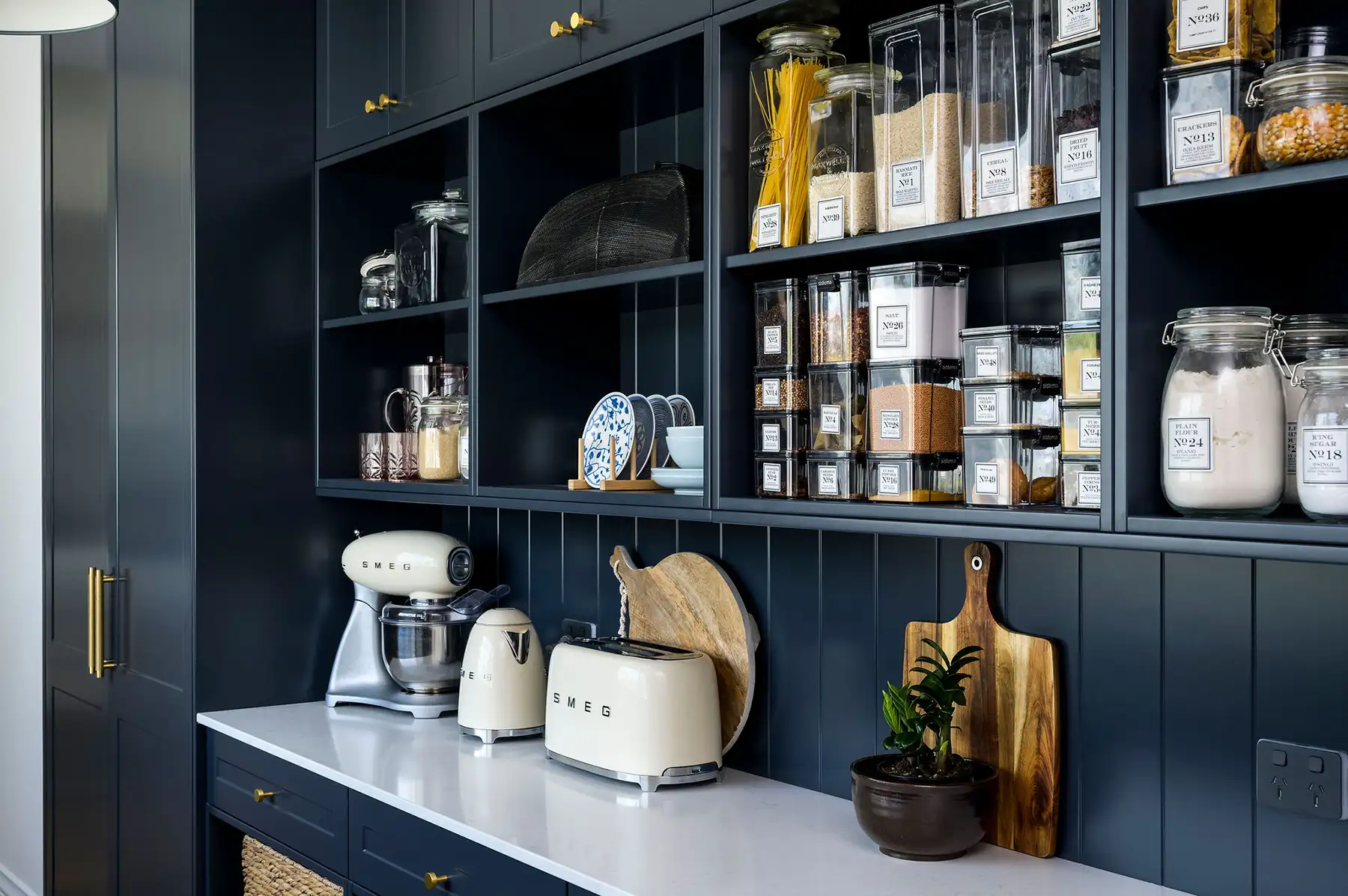
Small appliances are essential but they're not always pretty. Your butler's pantry can house the toaster, blender, stand mixer, food processor, and sandwich press you use regularly but don't want cluttering your kitchen benchtops.
Install power points at counter height and consider adding appliance lifts for heavy items like stand mixers. This way, your KitchenAid stays accessible but hidden until you need it. When you're making a cake or kneading pizza dough, simply lift it into position. When you're done, it disappears behind closed doors.
The beauty of this setup is that everything has a home, but you're not sacrificing convenience for aesthetics. Your kitchen looks magazine-ready while your most-used appliances are still just seconds away.
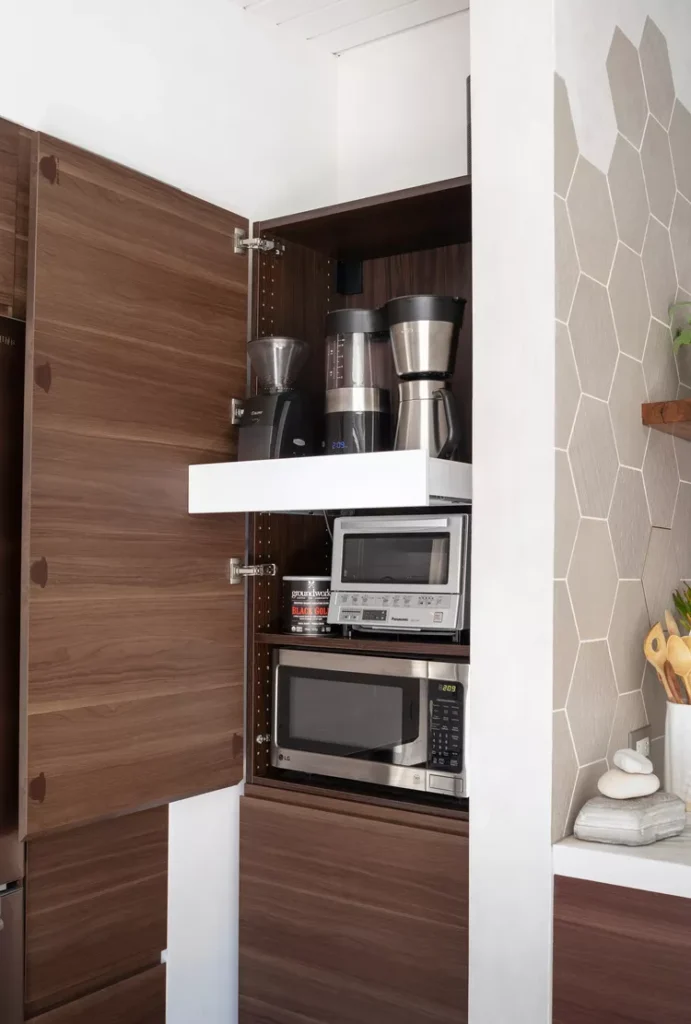
If your floor plan and budget allow, adding a second sink to your butler's pantry is a game-changer. Use it for food prep, washing vegetables, or quick cleanups that don't require the main sink.
This becomes particularly valuable when entertaining. Guests can rinse their wine glasses or grab ice without getting in your way, and dirty dishes can be discreetly rinsed and stacked away from the main action. During the week, it's perfect for morning smoothie prep or washing the breakfast dishes while someone else is using the main kitchen.
Pair the sink with a dishwasher if space permits, and you've essentially created a second, semi-private kitchen zone that keeps the mess out of sight when visitors arrive.
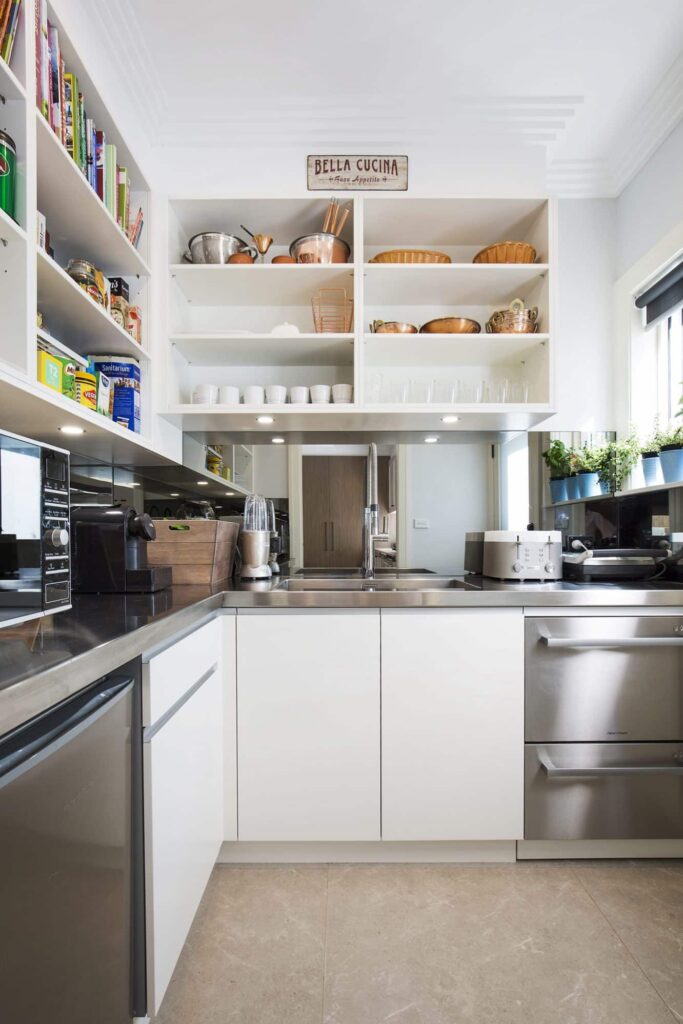
While the main purpose of butler’s pantry is storage, not everything needs to hide behind closed doors. Mix closed cabinetry with open shelving to display your nicer pieces, whether that's your collection of vintage glassware, beautiful serving platters, or those handmade ceramic bowls from the local markets.
Open shelving keeps frequently grabbed items visible and accessible, so you're not opening and closing cupboard doors every time you need a wine glass. It also adds personality to the space. This is where your well-loved cookbooks, the nice olive oil you splurged on, or a few potted herbs can live.
The trick is balancing display with practicality. Show off what you love and use regularly, but keep the clutter hidden away in the closed cupboards below.
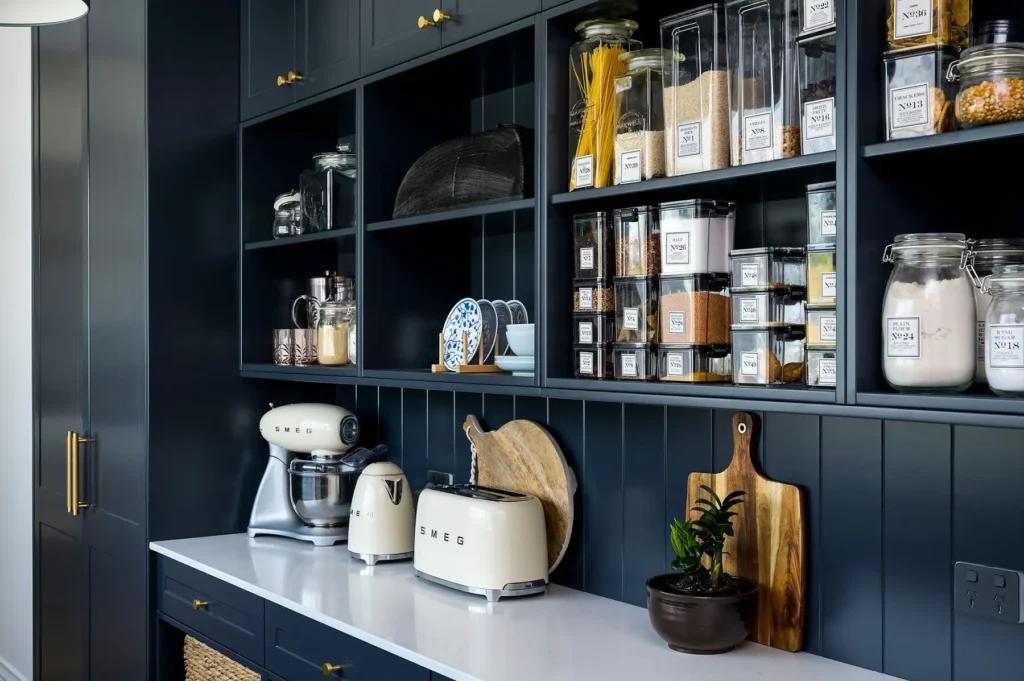
Clear counter space is gold in any kitchen, and your butler's pantry should offer plenty of it. This becomes your go-to spot for assembling school lunches, setting up weekend breakfast spreads, or prepping ingredients for dinner without competing for space with the stovetop action.
For families, this counter can double as a kids' snack station. Stock lower shelves or drawers with healthy snacks, reusable water bottles, and lunch boxes. The children can help themselves to fruit or crackers without disrupting meal prep, and everything stays organized in one dedicated zone.
During entertaining, use this space to stage drinks, set up a grazing platter, or arrange desserts before bringing them out. It's the behind-the-scenes workspace that keeps your main kitchen clear and your stress levels down.
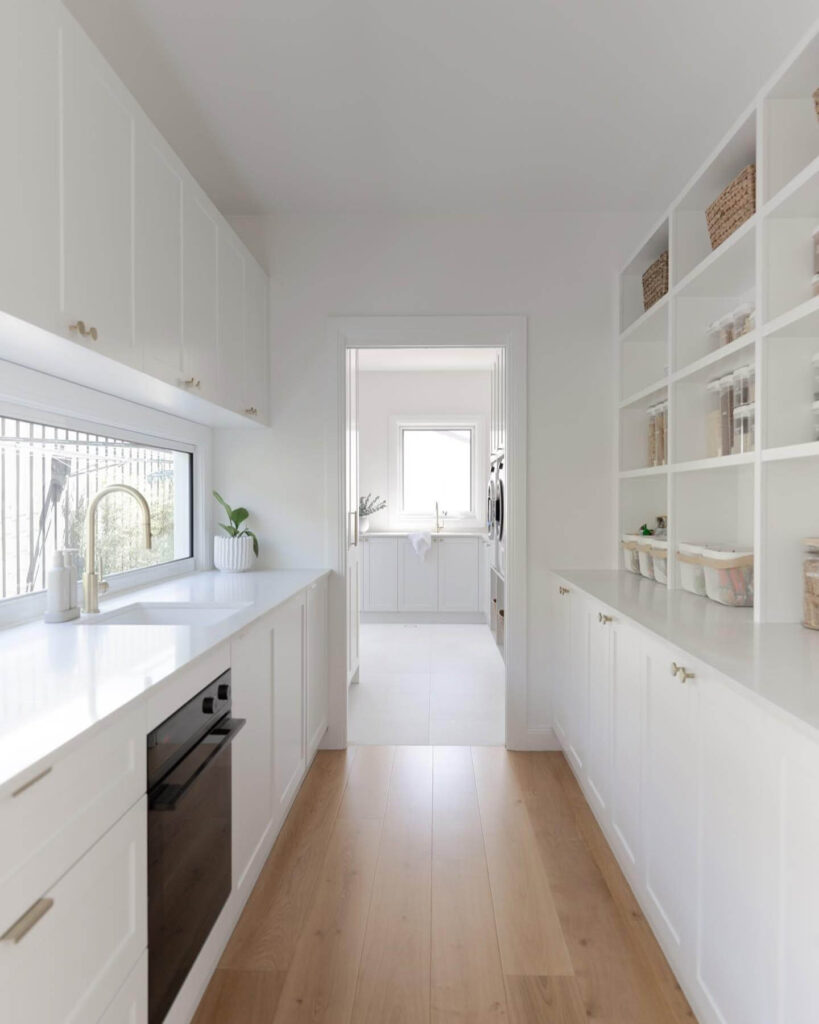
Nothing ruins a functional butler's pantry faster than poor lighting and insufficient power points. Install under-cabinet LED lighting for task areas, particularly above your prep counter and beverage station. You need to see what you're doing, whether that's chopping herbs or making coffee at 6am.
Plan for plenty of power points throughout the space. You'll need them for multiple appliances, phone charging stations, and any tech you keep in the area. Think about where you'll actually use each appliance and place the outlets accordingly, rather than clustering them all in one spot.
Consider adding a dimmer switch so the lighting can adapt to different needs. Bright task lighting works for meal prep, while softer ambient lighting suits those times when you're entertaining and want the space to blend seamlessly with your dining area. If your butler’s pantry is positioned on an external wall, adding a window can help flood the space with natural light.
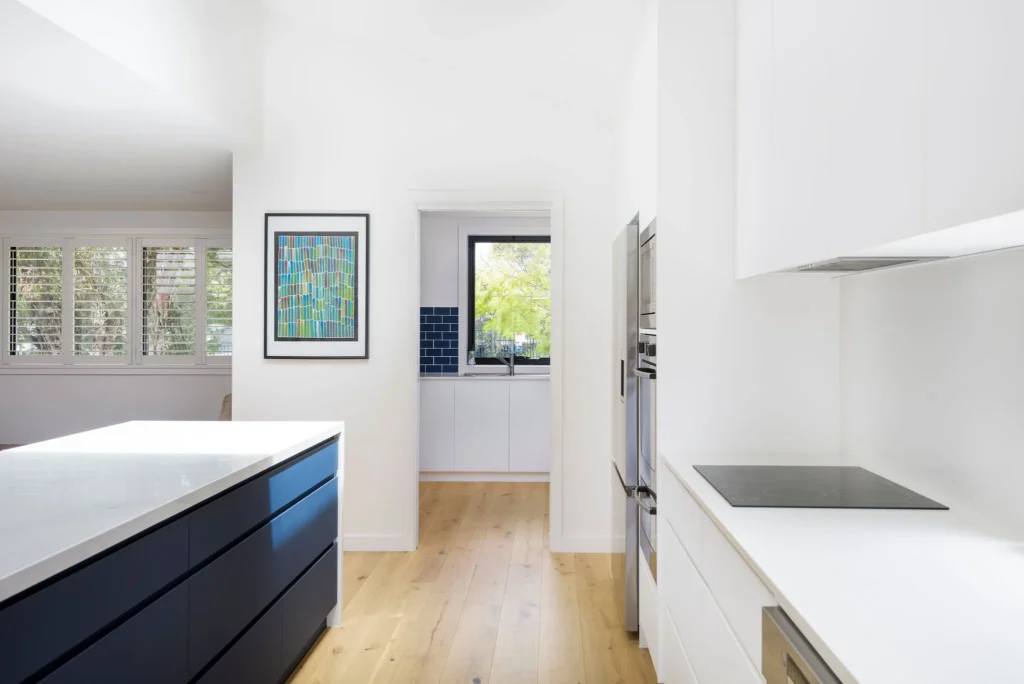
The key to a successful butler's pantry is designing it around how your household actually functions, not just how you think it should look. Consider your daily routines, the appliances you use most, and the storage challenges you face in your current setup.
A butler's pantry doesn't need to be enormous to be effective. Even a modest space of two or three metres can dramatically improve your kitchen's functionality when planned thoughtfully. It's about creating a transition zone that works overtime, handling everything from weekday breakfast chaos to Saturday night dinner parties.
The best part? Once your butler's pantry is working properly, you'll wonder how you ever managed without it. It's not about formal entertaining or keeping up appearances. It's about making everyday life just that bit easier.