

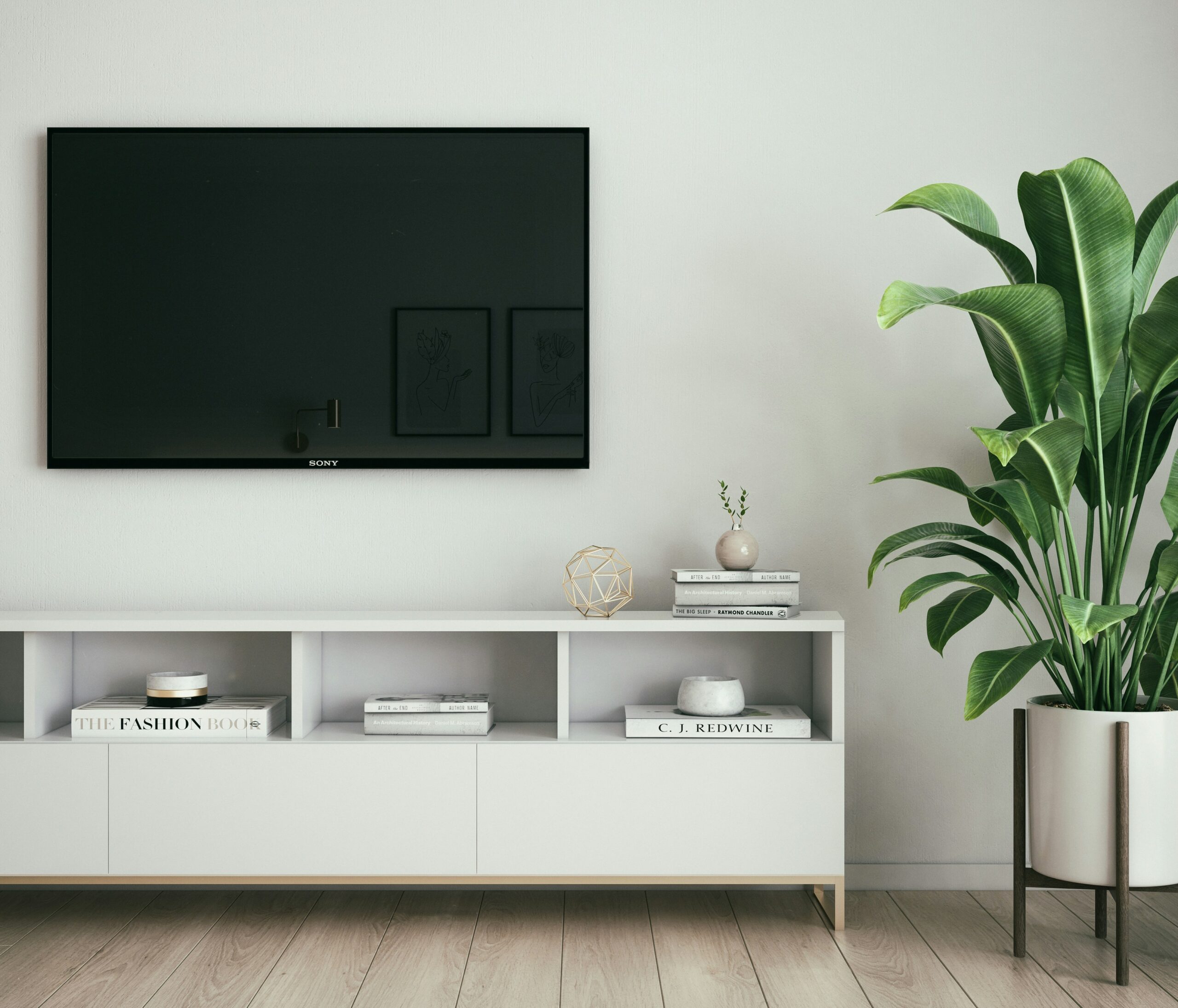
Getting a wall-mounted TV can transform your living space, creating that sleek, modern look while freeing up valuable floor space. But mount it at the wrong height and you’ll be dealing with neck strain every time you settle in for a binge-watching session. So what’s the ideal height for mounting your TV?
The Golden Rule: Eye Level is Key
The basic principle is simple: the centre of your TV screen should sit at eye level when you’re seated in your usual viewing spot. For most Aussie lounges, this works out to somewhere between 105-120 centimetres from the floor to the centre of the screen.
This range accounts for standard couches and recliners, which typically have seat heights around 45 centimetres. When you’re seated comfortably, your eye level usually sits about 105-115 centimetres off the floor.
Calculating Your Perfect Height
Here’s how to work out the exact mounting height for your space:
Step 1: Sit in your favourite viewing spot and measure from the floor to your eye level while seated. This is your target height for the TV’s centre.
Step 2: Measure your TV’s height (not the diagonal screen size, but the actual vertical height of the unit).
Step 3: Divide the TV height by two, then subtract this number from your eye-level measurement. This tells you where the bottom edge of your TV should sit.
For example, if your seated eye level is 110 centimetres and your TV is 70 centimetres tall, the bottom of the TV should be mounted at 75 centimetres from the floor (110 minus 35).
Room-Specific Considerations
Different rooms call for different approaches:
Lounge Room Stick with the eye-level rule. This is where you’ll likely spend the most time watching, so getting it right here matters most. If you’ve got a large sectional or multiple seating options at different distances, aim for a height that works best for your primary viewing position.
Bedroom Mount your TV slightly higher, with the centre around 120-135 centimetres from the floor. Since you’re often watching from a reclined or semi-reclined position in bed, a higher placement prevents you from straining to look down at the screen.
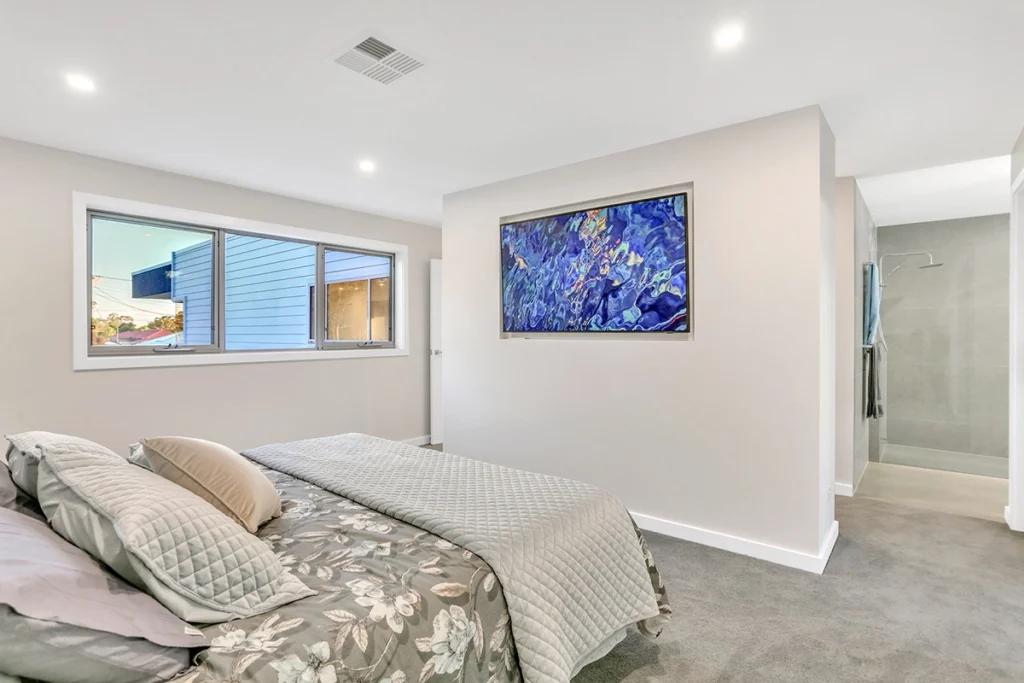
Home Theatre or Media Room Follow the eye-level principle strictly here. These spaces are designed for extended viewing, so comfort is paramount. Consider the seating rake if you have tiered seating.
The Viewing Angle Matters
Beyond height, think about the angle at which you’re viewing the screen. Ideally, you shouldn’t be looking up or down more than 15 degrees from straight ahead. Anything beyond this can lead to neck discomfort during longer viewing sessions.
This is particularly important if you’re considering mounting your TV above a fireplace, which often results in a viewing angle that’s too steep. While it might look aesthetically pleasing, your neck will pay the price after a couple of hours of watching the footy.
What About Large Screen TVs?
If you’ve splashed out on a massive 75-inch or 85-inch screen, you might need to adjust slightly higher than the standard recommendation. Larger screens have more visual real estate, and having the bottom edge too low can feel awkward. For these bigger units, having the centre point slightly above seated eye level (around 120-130 centimetres) often works better.
Common Mistakes to Avoid
Mounting Too High This is the most frequent error. Many people mount TVs at standing eye level rather than seated eye level, resulting in constant upward viewing that strains the neck. Remember, you’ll be watching from your couch, not standing in front of it.
Above the Fireplace Unless your fireplace mantel is unusually low, mounting above it typically places the TV far too high. If this is your only option, consider a tilting mount to angle the screen downward, though this isn’t an ideal solution.
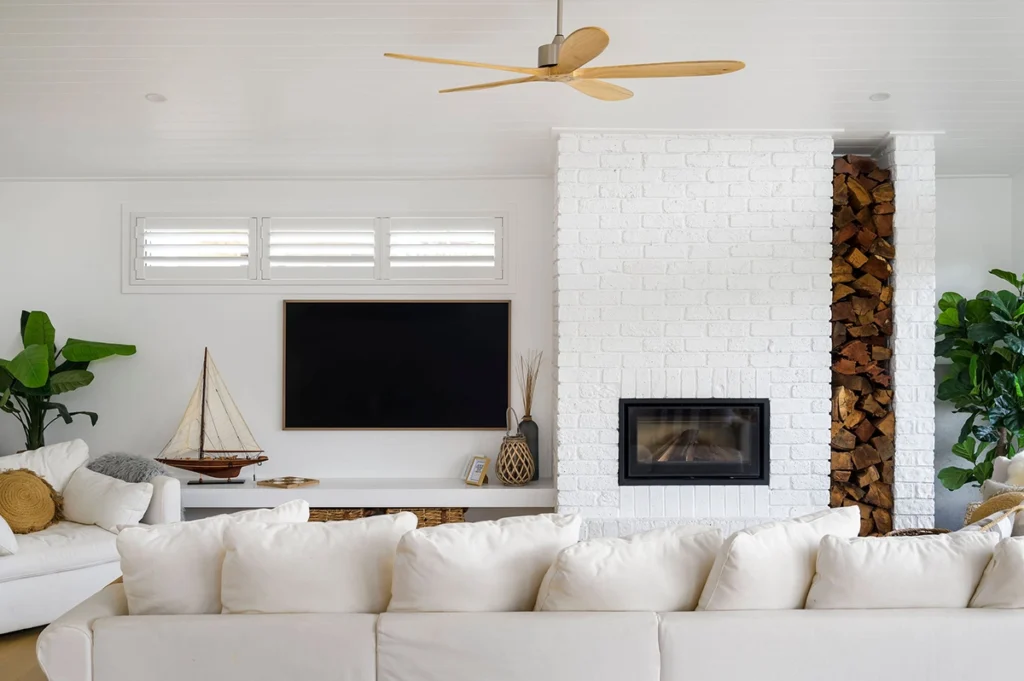
Not Accounting for the Mount Most TV mounts add between 5-15 centimetres of depth from the wall. If you’ve got wall sconces, artwork, or other features nearby, make sure you’ve got adequate clearance.
Ignoring Cable Management Plan where your cables will run before you drill. Many modern mounts include cable management features, or you might want to install an in-wall cable channel for a cleaner look.
Tips for Getting It Right
Test Before You Drill Before making any permanent holes, have someone hold the TV at your proposed height while you sit in your viewing spot. This gives you a real sense of whether the height feels comfortable.
Mark the Centre Point Use painter’s tape to mark where the centre of the TV will sit. Live with this for a day or two, glancing at it from your usual viewing positions to confirm it feels right.
Check Your Wall Type Make sure you’re mounting into studs or using appropriate anchors for your wall type. Plasterboard walls are common in Australian homes and require proper wall anchors rated for your TV’s weight.
Consider Future Furniture Changes If you’re planning to replace your couch or seating in the near future, factor in the potential height difference of new furniture before you mount.
The Bottom Line
While the 105-120 centimetre centre-height guideline works for most lounges, the best mounting height is ultimately the one that feels comfortable for your specific setup. Take the time to measure properly, test the position before drilling, and prioritise your viewing comfort over arbitrary rules.
A well-positioned TV transforms your viewing experience, making everything from weekend movie marathons to weeknight news watching more enjoyable. Get the height right, and you’ll wonder how you ever watched TV any other way.